Orange County Business Journal – Jack In The Box Sheds Del Taco For $115M

By: Emily Santiago-Molina

Talk about a value deal.

A multi-unit franchise operator from Northern California, Yadav Enterprises Inc., bought Lake Forest-based Del Taco from Jack in the Box for $115 million.

The San Diego-based burger chain offloaded the Mexican fast-food brand, known for cheap tacos and burritos, after acquiring the brand in 2022 for approximately $585 million.

Yadav is a Fremont-based operator of more than 310 franchise restaurants, including Jack in the Box, TGI Fridays, Taco Cabana and Nick the Greek.

The transaction, which includes roughly 550 Del Tacos, is expected to close in January.

“This is a bad thing for Jack in the Box,” John Gordon of Pacific Management Consulting Group told the Business Journal of the chain’s losing investment.

­Jack in the Box announced plans in April to divest the Del Taco business to strengthen its balance sheet and return to “a simpler, asset-light business model.”

“This divestiture is an important step in returning to simplicity, and we look forward to focusing on our core Jack in the Box brand,” Jack in the Box CEO Lance Tucker said in a statement. “After a robust process, we are confident we have entered into a transaction with the right steward for Del Taco in its next chapter of evolution.”

Del Taco generated systemwide sales of $959 million for the 12 months ended June 2025, down 2% from a year ago, according to Business Journal data. The taco chain’s same-store sales, a key metric that signals a brand’s financial health, declined by 2.6% in the fiscal third quarter ended July 6.

The sale is part of the operator’s “JACK on Track” turnaround plan to recover revenue. This included the closure of approximately 80 to 120 of its own underperforming stores.

Shares of Jack in the Box (Nasdaq: JACK) fell 8.7% to $17.61 per share in the trading session after the announcement; it had a market cap of $334 million at press time. The company also reported a 7.1% decrease in third-quarter same-store sales.

Before and After the Sale

Upon the initial buy in 2022, Jack in the Box said that acquiring the taco chain would help position both brands “as stronger QSR (quick service restaurant) players with greater scale and the ability to enhance the guest experience while pursuing profitable growth.”

“Together, Jack in the Box and Del Taco will benefit from a stronger financial model, gaining greater scale to invest in digital and technology capabilities, and unit growth for both brands,” previous CEO Darin Harris said at the time.

Harris resigned two years later, and current executive Tucker was named to the top role in March 2025 after filling the interim role for a month.

Since March 2022, shares have dropped by about 81%. Jack in the Box reported revenue of $1.69 billion for fiscal 2023, then dropped to $1.57 billion in 2024.

Analysts are expecting a 6.8% decrease to $1.46 billion in 2025.

Jack in the Box’s original plan for Del Taco was to refranchise or convert company-owned stores into franchises. At the time of the purchase, Del Taco had about 600 restaurants.

According to the Southern California-based restaurant analyst Gordon, the plan was conceived by the former management team, likely to help improve Jack’s balance sheet, and because “security analysts tend to favor franchised brands.”

In November 2022, the San Diego parent started selling company-owned Del Taco restaurants to existing franchise partners, as well as new franchisees. At the time, roughly half of Del Taco’s total restaurant count was company-owned.

By late 2024, nearly 80% of Del Taco locations were franchised. However, Gordon noted that existing Jack franchisees were not buying as many Del Taco restaurants as the company needed.

A few months later, Jack in the Box began seeking alternatives for the Lake Forest chain.

Gordon attributed the “JACK on Track” improvement efforts to Tucker, who first joined the brand as chief financial officer in 2024. When it came to recovery, it was easy to see that Del Taco was not a positive cash flow for the company.

The restaurant analyst said CEO Tucker is “right on mark,” given the circumstances of the decision to divest.

Del Taco’s future is “to be determined” as of now, Gordon added.

“We wish Del Taco success as they enter this next chapter,” Tucker said.

The San Diego Union Tribune – Jack In The Box Sells Its Entire Stake In Del Taco

The $115 million cash deal is aimed at bolstering the San Diego fast-food company’s bottom line

A Del Taco restaurant in the Midway District of San Diego. The chain was sold by Jack in Box on Oct. 16 for $115 million to Yadav Enterprises. (Rob Nikolewski/The San Diego Union-Tribune)

PUBLISHED:  | UPDATED: 

Jack in the Box is saying adíos to Del Taco.

The San Diego-headquartered restaurant giant announced Thursday it is selling its entire Del Taco chain to Yadav Enterprises, one of Jack in the Box’s franchisees, for $115 million in cash.

Jack in the Box management said the deal will bolster its bottom line by retiring debt and move the company “to a simpler, asset-light business model” as part of its “Jack on Track” plan that it rolled out to investors in April, aimed at improving long-term financial performance.

“This divestiture is an important step in returning to simplicity, and we look forward to focusing on our core Jack in the Box brand,” company CEO Lance Tucker said in a news release announcing the sale.

The transaction is expected to be completed by January.

Founded in 1964, Del Taco is the second-largest Mexican American quick-service food chain in the U.S., with more than 550 restaurants in 18 states.

Yadav Enterprises operates more than 310 franchise restaurants, including Jack in the Box, Denny’s and TGI Friday’s. The Fremont-based company also owns the Tex-Mex casual Taco Cabana chain in 150 locations and Nick the Greek restaurants in 90 locations.

The founder and CEO of Yadav Enterprises, Anil Yadav, started in the restaurant business as a 17-year-old fry cook at Jack in the Box, according to USA Today.

The sale comes three years after Jack in the Box bought Del Taco for $575 million.

“Jack in the Box made a very, very bad decision to buy Del Taco in 2022,” said John Gordon, head of the San Diego-based restaurant industry research firm Pacific Management Consulting Group. “We all kind of said at time, wow, that’s a lot of money they’re paying for Del Taco.”

Quick-service restaurants have faced recent financial headwinds, Gordon said, including increases in minimum-wage laws across California — $20 per hour for fast-food workers — plus an overall slowdown in the restaurant industry that contributed to Jack in the Box’s decision to sell its Del Taco holdings.

Traded on the NASDAQ, Jack in the Box stock took a hit Thursday, closing the trading day at $17.61 per share, down 8.66% from the previous day.

That said, Gordon believes the sale announced by Tucker, who was promoted from Jack in the Box chief financial officer to CEO on March 31, is a prudent one.

“They have to work their way through this high debt,” he said, “and I have no doubt at this point that the new CEO, who’s financially grounded in the first place, has a good plan to do so.”

One of the nation’s largest hamburger chains, Jack in the Box has about 2,160 restaurants across 22 states.

As for what the deal means for Del Taco customers, Gordon thinks Yadav Enterprises may close some restaurants that are financially underperforming — especially those outside of Southern California.

“I predict the next wave of ownership will thin down some of the existing Del Taco markets, where they perceive or can prove to themselves that there are too many stores,” Gordon said.

Earlier this year, Del Taco closed all of its restaurants in Colorado except one but months later reopened 17 stores in the Rocky Mountain State.

Nations Restaurant News – Is A Third-Place Coffee Shop Still Relevant In 2025?

Starbucks takes a major risk in going all-in on bringing back in-café experiences, while its competitors embrace the drive-thru lane

Joanna Fantozzi, Senior Editor

August 14, 2025

4 Min Read
Starbucks logo
Starbucks is zigging where others are zagging. Starbucks

If you walked into a Starbucks 15 years ago, you’d find a lobby filled with students reading with a coffee in hand, businesspeople on calls, and even first dates bonding over lattes. But Starbucks coffee culture gradually shifted from lingering social moments to an on-the-go experience where mobile pickup orders dominate over meetups with friends or clients.

When Brian Niccol took the helm as CEO almost one year ago, Starbucks was struggling through multiple quarters of declining same-store sales under his predecessor, Laxman Narasimhan, who blamed dwindling traffic on consumer price sensitivity and increased competition.

Drive-thru-centric coffee chains like Dutch Bros and 7 Brew have emerged as formidable competitors, particularly in the Midwest. According to Technomic Top 500 data, 7 Brew claimed the title of fastest-growing foodservice chain in the U.S. last year with 163% sales growth — nearly double the second-place chain. By comparison, Starbucks posted a 0.5% sales decline in 2024.

A brand overhaul was clearly necessary, which is why Starbucks lured Niccol away from Chipotle Mexican Grill with $85 million in cash and equity to revitalize the Seattle-based coffee giant. During his first year, Niccol has implemented numerous changes —eliminating charges for plant-based milks, restoring condiment bars, and bringing back names on cups. But perhaps his most significant cultural initiative has been the promise to resurrect the third-place coffee shop.

“We’re reclaiming the third place so our cafes feel like the welcoming coffee house our customers remember,” Niccol said in his first earnings call as CEO last October. “We’re beginning to review and revise our cafe designs to bring back more comfortable seating and amenities and to ensure our stores are a place where customers want to sit, work and meet.”

Niccol launched the “Back to Starbucks” initiative to reclaim the company’s coffee segment dominance. The challenge? Consumer demands have shifted dramatically in recent years. Starbucks now zigs where competitors zag. Recently, the company announced plans to phase out mobile order pickup-only stores — locations introduced in 2019 for high-density areas seeking faster service.

“The issue is that the American public has moved to be more on the go, and Starbucks was smart to follow that,” John Gordon, an analyst at Pacific Management Consulting Group, said. “They were also following store economics, and a store with a drive-thru essentially doubles the AUVs. … I like companies that are flexible on their store profile, because that’s what America is like now. You can’t just go out and build the same kind of concept over and over.”

This raises the question: As Starbucks remodels stores with more comfortable seating and cozier lighting, do on-the-go Americans in 2025 need the Starbucks of yesteryear? Or do they want an intuitive mobile ordering experience, fast service, and more affordable coffee prices?

Many trending drive-thru coffee chains have naturally replaced the third-place café with speed and friendly service, even through a car window.

“The ‘third place’ between home and work is your car,” 7 Brew CMO Nick Chavez said. “It’s not just a place to get where you’re going.  It’s a place to enjoy music, catch up with friends, recharge, grab a bite or a tasty beverage.  7 Brew is built for this modern ‘third place.’ We make the drive-thru an experience, a jolt of positivity.”

Scooter’s Coffee, an 849-unit drive-thru chain that achieved nearly 29% sales growth last year, offers a similar service approach. Scooter’s operates two models: drive-thru kiosks and classic coffeehouses with limited seating, and it emphasizes how quickly it allows customers to “scoot in and scoot out.”

“Even when we serve customers amazingly fast, our baristas still have the opportunity to form a personal connection with customers at the window through offering friendly customer service, asking about their day, and delivering an exceptional product with a smile,” John Owen, COO at Scooter’s, said. “Something as small as a quick, friendly interaction can change someone’s entire day.”

As Starbucks looks ahead, many changes are still in progress — remodeled stores just began appearing this summer in New York and California — and transforming a 17,000-unit coffee chain takes time. Despite the increased competition, Starbucks’ U.S. footprint is more than 17 times the size of its largest drive-thru-centric competitor, Dutch Bros.

Niccol acknowledges the on-the-go reality of today’s consumer. During his first year as CEO, he introduced in-app first-party delivery capabilities for the first time and improved digital order sequencing with the goal of reducing wait times to four minutes or less.

Starbucks consistently emphasizes removing friction from customer experiences, whether for guests lingering over in-house beverages or rushing in for mobile orders before work.

With this new direction, Niccol is taking a strategic risk that by positioning Starbucks as the legacy brand with old-school coffeehouse vibes, the company will differentiate itself from younger, nimbler competitors and continue to be the industry leader.

“Every Dutch Bros or 7 Brew I’ve ever been to had no inside seating, much less a warm, comfortable interior atmosphere,” analyst Mark Kalinowski said. “These competitors do what they do well, but it’s a different experience than a third-place experience. Starbucks has room for improvement in how it offers up this experience to its guests, and recognizes this, which is a big step in the right direction.”

Contact Joanna at joanna.fantozzi@informa.com

SeafoodSource – Darden Enjoys Sales Spike In Fiscal Q4 2025, Considers Selling Bahama Breeze

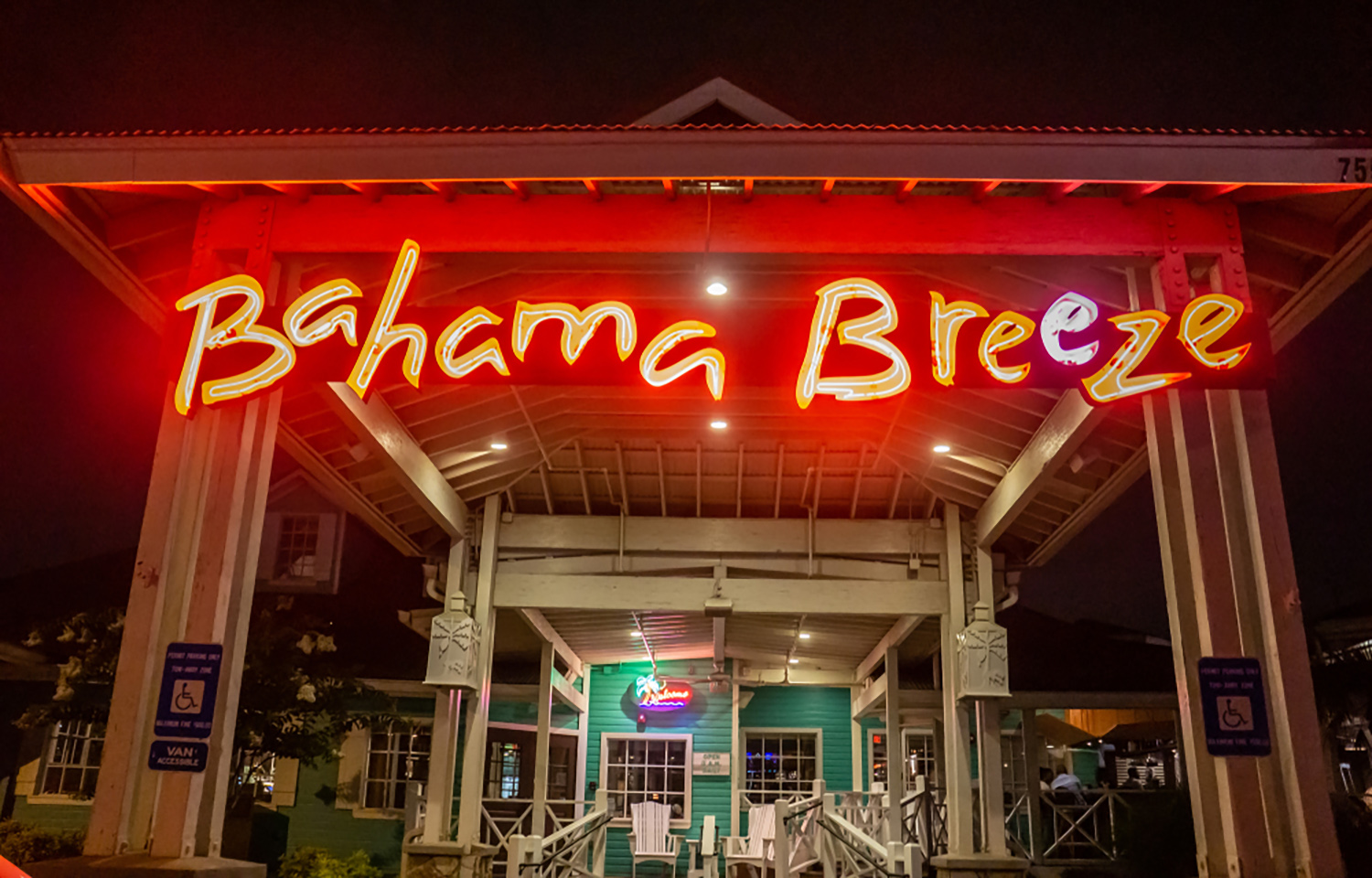
The exterior of a Bahama Breeze location in Kennesaw, Georgia, U.S.A.
As part of its strategy for its 2026 fiscal year, Darden Restaurants is considering selling off its Bahama Breeze chains or converting them to other Darden brands | Photo courtesy of Jaimieandkyleshootstock/Shutterstock

The sales of Orlando, Florida, U.S.A.-based restaurant operating firm Darden Restaurants soared in its fourth fiscal quarter of 2025, but its Fine Dining segment, which includes such chains as The Capital Grille and Eddie V’s Prime Seafood, took a hit in the period.

The company’s total sales in the quarter surged 10.6 percent year over year to USD 3.3 billion (EUR 2.9 billion), driven largely by a blended same-restaurant sales increase of 4.6 percent, as well as sales stemming from the acquisition of 103 Chuy’s Tex Mex restaurants and 25 net new restaurants.

For its entire 2025 fiscal year, Darden’s sales increased 6 percent to USD 12.1 billion (EUR 10.5 billion).

Two of its chains, LongHorn Steakhouse and Olive Garden, performed especially well in the three-month period, but sales in its Fine Dining segment declined 3.3 percent.

Pacific Management Consulting Group Founder and CEO John Gordon told SeafoodSource that fine dining has struggled across the restaurant industry. He attributed some of the slowdown in the subsector to restaurants like The Capital Grille being typically located in urban centers that are still impacted by employees working from home on a hybrid basis after the Covid-19 pandemic.

For its 2026 fiscal year, Darden will likely raise prices on its menus around 2 percent and then a bit more as the year goes on, CFO Raj Vanam said on an investor earnings call.

“We try to price as little as possible and still get the returns we could get. It’s worked well for us, and we always play the long game. We’ll continue to do that,” he said.

The company is implementing price increases partly because it expects food costs across all of its commodities to rise around 2.5 percent in the first half of its fiscal 2026 year. The company expects “mid single digit” inflation on seafood and beef.

Elsewhere, after closing 15 Bahama Breeze locations in May, Darden executives have determined that Bahama Breeze isn’t a strategic priority for the company and are considering selling the restaurants or converting them to other Darden brands, CEO Rick Cardenas said, per Restaurant Dive.

While Bahama Breeze has a fair amount of growth potential, it could benefit more under another owner, Cardenas said.

SeafoodSource – Red Lobster Banks On Value, Sports Partnerships In Turnaround Effort

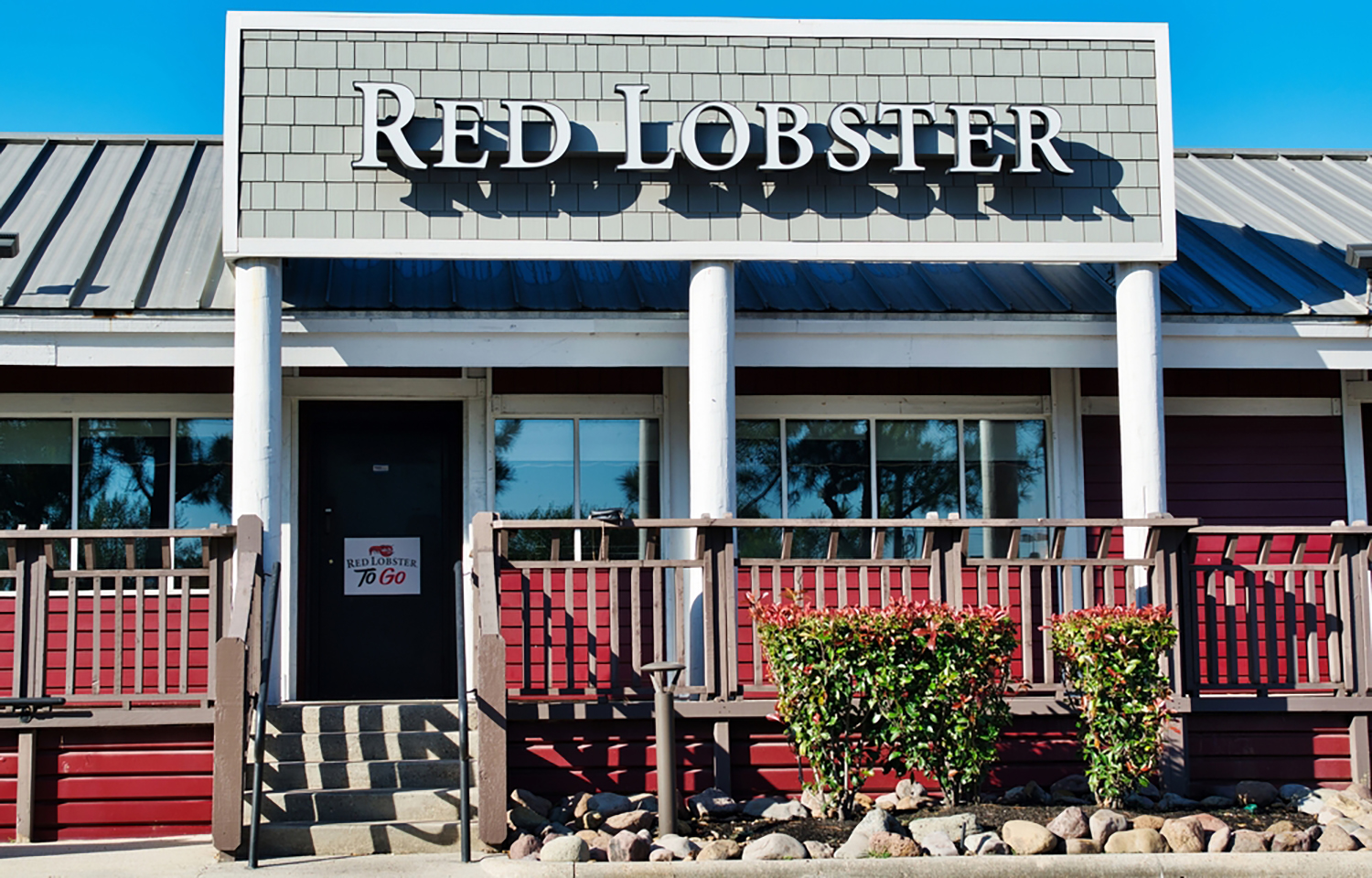
A Red Lobster location in Houston, Texas, U.S.A.
A Red Lobster location in Houston, Texas, U.S.A. | Photo courtesy of Brett Hondow/Shutterstock

Orlando, Florida, U.S.A.-based Red Lobster is promoting value with meal deals and happy hour specials as part of a larger effort to turn around sales post-bankruptcy.

“It’s a new day at Red Lobster, and we’ve made some changes we think our guests will be happy with. From innovative menu items, the return of fan favorites, and the introduction of happy hour, we’ve been putting in the work to create the best experience for our diners,” Red Lobster CEO Damola Adamolekun said on LinkedIn.

In a new ad, running on TV and online, Adamolekun said there is “plenty” on the menu at or under USD 20 (EUR 17.50). For example, in May, the company debuted a Shrimp Sensation three-course meal, which includes a choice of soup or salad, a shrimp appetizer, and a shrimp entree and side for USD 20.

Adamolekum also touted Red Lobster’s new happy hour that includes USD 5.00 (EUR 4.40) drinks and appetizer deals. One thing that won’t be changing, he stressed, is the restaurant chain’s popular Cheddar Bay Biscuits.

“We got that right the first time,” he said.

The restaurant chain also recently became the official sponsor for BIG3 – a 3-on-3 basketball league founded by hip hop musician Ice Cube and entertainment executive Jeff Kwatinetz, as well as one of the sponsors of the WNBA team the Chicago Sky throughout the 2025 season.

”I don’t know what it’s done for sales yet; we will see eventually,” Pacific Management Consulting Group Founding Principal John Gordon told SeafoodSource.

Nevertheless, the fact that the company is paying for marketing and sponsorships is a positive sign that “the turnaround plan is delivered,” Gordon said.

The most recent moves follow several other efforts Red Lobster has made since emerging from bankruptcy, including streamlining its menu and marketing partnerships with celebrities such as Flavor Flav.

However, customer visits to Red Lobster continued to plunge this year, dropping 31 percent in January compared to January 2024 but slightly improving to a decline of 20.4 percent in April, according to Placer.ai.

A 20 percent reduction in restaurant locations contributed somewhat to the year-over-year traffic declines, but Placer.ai Head of Analytical Research R.J. Hottovy told SeafoodSource that visits per location have decreased as well.

“This suggests that the chain’s ongoing turnaround efforts have yet to fully gain traction and may also reflect broader economic headwinds. In the current environment, consumers remain highly price-conscious and have scaled back on dining out,” he said.

Reuters – McDonald’s To Close Standalone Beverage Concept

By

May 23 (Reuters) – McDonald’s Corp is shutting down the five beverage-centered CosMc’s stores it opened in 2023, but said some drinks from the standalone concept would be tested in McDonald’s restaurants.
The company said on Friday it had opened the stores as a test to learn more about the “fast-growing beverage space,” which it said it had a “right to win.”
It said the standalone stores – in markets including San Antonio, Texas – allowed it to test new flavor and technologies without impacting existing McDonald’s restaurants.
The company said it will test “CosMc’s-inspired” drinks to its main menu at hundreds of U.S. stores. The company has more than 14,000 locations in the U.S.
In March, McDonald’s announced it would be establishing a new internal team to develop new beverages.
The company said all CosMc’s would be closed on a rolling basis beginning in late June. The CosMc’s app will also be discontinued.
Restaurant consultant John Gordon said McDonald’s has historically been “very quiet” in the beverage space compared with other restaurant chains, which have experimented with complicated drinks that typically carry a higher profit margin than food items.

Reporting by Waylon Cunningham in New York Editing by Matthew Lewis

The San Diego Union Tribune – Jack In The Box Launches Turnaround With Plan To Close Up To 200 Locations

In a move to focus more on growing the Jack in the Box brand, the San Diego-based company is also mulling selling Del Taco.

This Jack in the Box in North Park is among nearly 2,200 restaurants across the U.S. (Roger Showley / The San Diego Union-Tribune)
PUBLISHED:  | UPDATED: 

In a surprise move, Jack in the Box announced this week it would be closing as many as 200 of its restaurant locations, in addition to possibly unloading Del Taco, a chain it purchased only three years ago.

The latest initiative by the San Diego-based fast-food chain will allow it to focus more exclusively on the Jack in the Box brand, while shuttering underperforming restaurants and raising cash to eventually pay down $300 million in debt, the company’s new CEO, Lance Tucker, said.

The closing of dozens of locations, none of which have been announced yet, will be done in phases with the first 80 to 120 to be shuttered by the end of this year. The company is calling its new strategy, “JACK on Track.”

“We expect closing these restaurants will strengthen the overall long-term economics of our franchisees, free up dollars for reinvestment, and allow the system to focus on maximizing performance of our stronger restaurants,” Tucker said during a Wednesday conference call with analysts and investors. “In short, we anticipate this program will better position Jack in the Box for more reliable, consistent, positive unit growth in the future.”

While Tucker did not indicate whether Del Taco is formally up for sale, he said that Jack in the Box is currently working with B of A Securities to explore a potential divestiture.

The decision to sell stores as well as the Del Taco chain comes at a time when fast-food restaurants in general face a number of challenges, including higher wages in California, food cost inflation and, more recently, a pullback in spending by consumers in the face of economic uncertainty.

The new strategy effectively returns Jack in the Box to its roots when the focus was solely on the burger chain. It no longer owns the Qdoba fast-casual Mexican brand that it purchased more than two decades ago and later sold. And it could soon be free of Del Taco as well. The purchase of the chain — for $585 million — closed in 2022.

“The problem is they bought Del Taco in the first place and paid too much,” said San Diego restaurant consultant John Gordon. “They hoped that they could sell off a bunch of Del Taco’s company-owned stores and there would be a lot more growth in Del Taco, not just from franchisees but also from Jack in the Box franchisees who would buy Del Taco stores, but that didn’t happen. It was a bet by the prior CEO, but one that didn’t pay off.”

Gordon said he and others have estimated that Jack in the Box overpaid for Del Taco by $200 million to $300 million,

According to the latest financial figures released by the company this week, same-store sales for both brands struggled during the last quarter ending April 13. They were down by 4.4% for Jack in the Box and 3.6% for Del Taco. In all, there are 2,191 Jack in the Box stores, of which the vast majority are franchised. The highest concentration of locations is in California and Texas, and of those, 103 are in San Diego County, which includes two venues at the airport and one at Petco Park.

There are nearly 600 Del Taco restaurants, with more than half in California.

In explaining the move to sell Del Taco, Tucker was careful to place no blame on the chain itself.

“I think highly of the Del Taco brand, and I think it can thrive,” he told analysts. “I just think it needs to be in a situation … where we need to focus on our own core business. It just makes a lot more sense to simplify our model, and they can move ahead and in addition to that, I don’t know (that) the results in the next several years are going to meaningfully contribute to Jack’s bottom line so I think it makes sense to move them on to another owner.”

He also acknowledged the timing of the purchase was not great, coming about a year before new legislation was passed mandating a $20-an-hour minimum wage for fast-food workers. The new hourly wage went into effect last year.

Gordon pointed out that the latest decisions were no doubt prompted, in part, by looming debt coming due. The company, he said, is facing repayment of more than $500 million in secured notes by February 2027.

“What may have frightened the board is that they’re thinking, ‘Oh no, we bought into this bad concept of Del Taco and now we have a debt payment coming up on it,’” Gordon said. “Normally, restaurants don’t like to close down units but now the situation is far more severe. They need to make the fixes to the system now so that later the base of the system improves and they can be in better shape.”

Jack in the Box’s stock price closed Thursday at $23.96 a share, down $1.45 or 5.72%. The stock has fallen nearly 60% in the past year.

Orange County Business Journal – The Future Of El Pollo Loco At Stake

By Emily Santiago-Molina

Biglari Capital Corp., the owner of a Midwestern burger chain and a well-known proxy battle instigator, is trying to scoop up Orange County’s El Pollo Loco.

The Costa Mesa-based restaurant chain said it “received an unsolicited, non-binding indication of interest” from San Antonio-based Biglari on April 6.

Biglari, founded and led by Chairman and Chief Executive Sardar Biglari, began purchasing shares in El Pollo Loco (Nasdaq: LOCO) in August 2023, accumulating then a more than 10% stake in the chain. The Steak ‘n Shake owner now owns nearly 4.5 million shares, or 15%, according to a March 1 Biglari shareholder letter.

The holding company is now looking to acquire the remaining amount of El Pollo Loco stock.

Shares of El Pollo Loco, which has nearly 500 restaurants across seven U.S. states, jumped as high as $10.60 apiece during midday trading the next day. At press time, shares fell back down to $9.63 with a market cap of $287 million.

Board members said they were “in the process of carefully evaluating the proposal” in an April 7 filing with no set timetable for any decision related to Biglari’s inquiry.

El Pollo Loco, known for its citrus-marinated, fire-grilled chicken, and Biglari Capital entered into a confidential customary standstill agreement. As such, the chain said it would not provide any additional comment on the matter.

Back in 2023, El Pollo Loco took note of Biglari’s sudden interest in the company.

The company adopted a rights agreement that year “in response to a rapid and significant accumulation of company stock by Biglari Capital Corp.,” according to SEC filings.

“The Board noted that Biglari Capital has a track record of acquiring substantial and sometimes controlling interests in public restaurant companies,” a March filing said, also noting that a Biglari representative had “stated a desire to make substantial additional share accumulations in the public market” if the agreement was terminated or expired.
Biglari’s 15% El Pollo Loco stake tops the chain’s other major investors: BlackRock Inc., Dimensional Fund Advisors LP and CapitalSpring Finance Company LLC.

“There is no assurance that the indication of interest will result in a formal offer or any transaction,” the March filing said. Besides Steak ‘n Shake, Biglari also owns steak buffet chain Western Sizzlin and holds 2.1 million in stock of Cracker Barrel Old Country Store Inc. (Nasdaq: CBRL), 9.3%, as of March.

Pursuing a Turnaround

Sales growth has slowed for El Pollo Loco in the past five years; last year, revenue inched about 1% to $473 million. The restaurant chain recently reported fourth-quarter revenue of $114 million, up 1.8% compared to a year ago.

Analysts aren’t expecting much sales growth, predicting 4.3% to $493 million this year followed by a 1.8% increase to $502 million in 2026.

El Pollo Loco’s newest leader, former Taco Bell executive Liz Williams, came onboard as chief executive in early 2024 with plans to get the business out of a growth rut by laying the foundation for national expansion.

“When I came in here, we weren’t growing in terms of new units. So, we’ve put a lot of things in place to get the pipeline built so that we can grow again,” Williams told the Business Journal back in December.

El Pollo Loco is forecasting the opening of up to 11 new restaurants in 2025, adding to its current count of 498 with a new and more affordable store model in place.

“El Pollo Loco’s basic problem is that they have been most successful in this corner of the country. They haven’t been able to breakthrough as a national brand yet,” restaurant analyst John Gordon of Pacific Management Consulting Group told the Business Journal, referring to the chain’s core California market.

The company went public at $15 a share in 2014 when it almost touched $40 each. For most of the past decade, shares have bounced between $10 and $20. In the five weeks prior to Biglari’s interest becoming known, the shares fell 25%.

“Biglari may be thinking (that) this is the time to buy into El Pollo Loco and then hoping for the bounce to occur later,” Gordon said.

El Pollo Loco is Orange County’s fifth-largest restaurant chain based in the region ranked by systemwide sales of $1 billion for 2023.

Steak ‘n Shake Owner Founded 17 Years Ago

Biglari, founded in 2008, publicly trades under Biglari Holdings Inc., which has a $681 million market cap (NYSE: BH). Its annual revenue has hovered around $365 million in each of the past three years.

The firm’s investment activities are conducted through its affiliate, the Lion Fund, which CEO Biglari started in 2000.

The company describes itself as “a collection of controlled and noncontrolled businesses — a group we seek to build upon with companies possessing excellent economics and exceptional management,” according to its 2024 shareholder letter released Feb 28.

Steak ‘n Shake was Biglari’s first acquisition, taking it over 17 years ago when the iconic burger chain had nearly 500 locations. The 91-year-old chain had 426 units at the end of 2024, according to Biglari’s 2024 annual report.

Gordon noted that Biglari discovered Steak ‘n Shake when management was poor, so when he conducted a proxy contest, “shareholders just, kind of surrendered.”

Besides restaurants, the company’s portfolio also includes two insurance companies, two oil and gas operations and a publishing business. Abraxas Petroleum was its last purchase in 2022.

Biglari said that since its founding, its cash and investments have grown from $1.6 million to $790 million in 2024. The firm reported pre-tax operating earnings of $32.6 million in 2024 from all seven companies.

“Every subsidiary must be a long-term supplier of cash to (the) parent company,” according to Biglari, which he uses to fund acquisitions.

‘Lone Wolf’ Strategy Based on Opportunity

“Our path to prosperity — the purchase of businesses in their entirety but also, secondarily, the purchase of partial business ownership via the stock market — is based on opportunity,” Biglari said.

Biglari’s partner is his former college professor Phil Cooley, who is vice chairman at the company. The executive doesn’t hold earnings calls and rarely appears before investors, opting instead to pen lengthy shareholder letters each year.

“Biglari is known in the restaurant world, and in the investment community, as somewhat of a lone wolf,” Gordon said.

Along with El Pollo Loco and Cracker Barrel, Biglari’s current stock investments include Ferrari N.V.

According to the shareholder letter, it holds 440,000 shares in Ferrari valued at $187.5 million at year-end 2024, making the luxury automaker the company’s most valuable common stock holding.

A year ago, Biglari said that one of those investments included a 5.5% stake in San Diego’s Jack in the Box Inc., owner of Irvine-based Del Taco. According to a Jack in the Box proxy statement from January 2025, the company still holds 5.7% of common stock with 1.1 million shares.

“It’s that he’s dipping his toe in the water and waiting to see whether this is an appropriate company to go to battle for, or go to battle with,” Gordon said.

“We would rather own a fraction of an outstanding business than 100% of a mediocre one,” Biglari said. “Phil and I continue to search for sensible acquisitions that will advance operating earnings over time.”

Gordon noted: “The problem is that the restaurant world has changed so much since 2008. We’re in a terrible hole in the restaurant space right now because of plunging consumer confidence, because of fear of tariffs. Then the quick service restaurants have all been in this price war, and consumers at either the top end of the income scale or the bottom end have cut back on visits.

“This isn’t absolutely the best time to invest a lot of money into a brand,” he added.

Investor’s Feistiness Shows in Cracker Barrel Battle

If Biglari Holding Inc.’s prior clashes with publicly traded restaurant chains are any indicators, El Pollo Loco executives and shareholders should prepare for a long battle. The San Antonio-based Biglari last summer went into a proxy fight again with Cracker Barrel Old Country Store Inc.—the seventh such contest in nearly 14 years.

Biglari (NYSE: BH) first purchased more than 4.7 million shares in Cracker Barrel in 2011. It has since downsized to 2.1 million shares with control of 9.3% of the restaurant operator’s stock (Nasdaq: CBRL).

Last August, Cracker Barrel released a statement in response to Chief Executive Sardar Biglari’s intent to nominate five candidates for the board last year.

“This marks the sixth time Biglari has nominated candidates for board seats, the fourth time nominating himself, and the seventh proxy contest overall,” according to the statement. “Each time, our shareholders have rejected Biglari’s nominees and positions by significant and increasing margins.”

Cracker Barrel added that it was “disappointed that Biglari has chosen to launch another distracting and costly proxy contest.”

Biglari wrote a letter to Cracker Barrel shareholders in October noting that they had “collectively lost over $2.9 billion in market value,” citing that the new CEO appointment and transformation plan had not “restored shareholder confidence” among other “management failures.”

“He’s been a pest at trying to take over Cracker Barrel, and other restaurant companies, (wasting) a lot of money for himself and for the companies that are fighting him,” restaurant analyst John Gordon of Pacific Management Consulting Group said.

In November, only one of Biglari’s recommended nominees made it to the board, PetSmart’s Michael Goodwin.

“We pay heed to the counsel of Bette Davis in the 1950 classic All About Eve: ‘Fasten your seatbelts. It’s going to be a bumpy night,’” Biglari wrote in a letter to his shareholders in March.

“The cash generation of our operating businesses, along with a rock-solid balance sheet, permits us not only to make it through the troughs but also to take advantage of the transfers of wealth they precipitate,” he said. “We welcome a bumpy ride if it leads to a better destination.”

The San Diego Union Tribune – San Diego’s Jack In The Box Gets A New CEO But Can He Deliver Gains?

The new CEO has been a CFO previously at Jack in the Box and Papa John’s but never a chief executive of a restaurant chain.

Jack in the Box has a new CEO who at one time served as the company's chief financial officer. (Roger Showley / The San Diego Union-Tribune)
Jack in the Box has a new CEO who at one time served as the company’s chief financial officer. (Roger Showley / The San Diego Union-Tribune)
PUBLISHED:  | UPDATED: 

In a not so unexpected move, Jack in the Box has named interim CEO Lance Tucker its permanent chief executive, just a little over a month after the former head of the company resigned.

While Tucker’s restaurant experience is broad and he’s previously held chief financial officer positions with Jack in the Box and other dining chains, a CEO post will be a first for him. Tucker rejoined Jack in the Box as head of finance in January; he previously held the position from 2018 to 2020 and before that worked several years for Papa John’s.

Jack in the Box Chairman of the Board Dave Goebel highlighted Tucker’s deep experience in a statement he made about the appointment.

“Lance brings decades of experience within the restaurant industry as well as a financial mind into the CEO role that is well-timed to match with the company’s current priorities,” he said  “We are confident that Lance will position our company to perform at high levels, and drive returns that shareholders expect from our iconic brands and profitable business model.”

Tucker replaces Darin Harris, who had been the company’s chief executive since 2020. He left to take a new position outside of the restaurant industry.

During a recent earnings call in February, Wall Street analysts got a taste of Tucker’s expectations for the coming year as it relates to new store development. The chain had increasingly moved toward trimming the number of company-owned and operated restaurants in favor of growing its franchised locations.

“I do think there is a place for company store builds. And there are some places where we’re going to be investing alongside franchisees, particularly in new markets,” he said during the call. “With that said, I think we’re an asset light company. And the plan is not to be leading the growth with corporate builds.”

Given Tucker’s extensive experience with restaurant chains, he has the wherewithal to be a capable, smart chief executive, says San Diego restaurant analyst John Gordon. But the jury’s still out on how well he can execute given the keen competition, especially in California, Gordon adds.

In addition to the Jack in the Box restaurants, the San Diego-based company also owns Del Taco, the second-largest Mexican American fast-food restaurant chain in the U.S.

“He’s a very fine financial executive, but the question is whether he can get Jack in the Box and Del Taco restarted with franchisee growth,” Gordon said. “Their unit count growth is practically zero. It’s because of cost of construction in California is very expensive, and we also have a $20 minimum wage (for fast food workers) in California. Competition here is also fierce, especially so with In-N-Out and, to a lesser degree, Chick-fil-A.

“It’s just that his record as CEO of a primarily franchised company is untested.

According to the company’s SEC filings, total Jack in the Box outlets numbered 2,241 in 2020. By last year, the total had fallen slightly to 2,191.

As new CEO, Tucker will earn a base salary of $925,000, a slight boost from the $900,000 he was to earn when appointed interim chief executive. In addition, he will receive a yearly bonus of 115% of his base salary if he meets certain performance goals. Tucker also will get a cash payment of $500,000 for relocation assistance and housing expenses.

The San Diego Union Tribune – Jack In The Box CEO Resigns. What Does That Mean For The San Diego Company?

CEO Darin Harris resigned this week, announcing he’s accepted a job outside of the restaurant industry.

A Jack in the Box drive-thru in North Park.

PUBLISHED:  | UPDATED: 

Jack in the Box, the San Diego-based fast-food chain, needs a new leader after its CEO of five years announced his resignation Monday.

Darin Harris, who has served as chief executive officer since 2020, has accepted a new position outside of the restaurant industry, the company said. He will stay on with Jack in the Box as a consultant until March 14.

When Harris took the helm of Jack in the Box, the company was at an inflection point.

The company’s previous CEO, Leonard Comma, was at odds with franchisees. After Jack in the Box pivoted its model and significantly reduced the number of company-owned and operated restaurants, franchisees called for Comma’s resignation.

San Diego restaurant analyst John Gordon said that Harris joined amid “a full-fledged U.S. franchisee revolt underway due to poor store returns and perceived lack of corporate focus.” He credited Harris and his team for managing to address and improve those critiques regarding the culture at headquarters and the company’s overall focus.

“However, the overall business did not improve,” Gordon said in an email to the Union-Tribune. “Jack in the Box was not able to produce meaningful net new store growth, and the stock price has now declined 70% from its peak (in) 2021 … The $575 million 2022 Del Taco acquisition has been a drag on profits thus far.”

Jack in the Box is one of the nation’s largest hamburger chains with approximately 2,200 restaurants across 23 states and Guam. It also owns Del Taco, the second-largest Mexican American fast-food restaurant chain in the U.S.

But, a new permanent leader for the fast food chain will still have to contend with industry-wide challenges, Gordon explained.

He said there’s immense competition in the quick-service hamburger and taco business sector, which is already difficult. In California, a nearly 20% wage hike went into effect last year, specifically for fast food workers.

“Those conditions will not change,” Gordon said.

During the transition, Chief Financial Officer Lance Tucker has taken the role of interim-CEO, effective Feb. 24. Tucker rejoined Jack in the Box as head of finance in January; he previously held the position from 2018 to 2020.

He will receive a $250,000 pay bump, bringing his annual base salary to $900,000 until the board determines an end date, according to SEC filings. Tucker was also granted one-time restricted stock, tied to performance, worth about $500,000.

Additionally, Dawn Hooper, the company’s senior vice president and controller, has been appointed interim principal financial officer and principal accounting officer. Her base salary will increase $19,500 per month during this transition period.

The San Diego-based company reported first quarter earnings for the fiscal year 2025 on Tuesday. Jack in the Box reported quarterly net income of about $33.7 million, which was down about 13% from the same period last year. Total revenue was down about 3.7% year over year, which the company attributed as “primarily the result of the Del Taco refranchising transactions.”

“The first quarter saw a good start to top-line performance and bottom-line earnings flow through as we battled through a difficult industry-wide macro environment,” Tucker said in the earnings announcement. “In my new role, I will be continuing to assess capital allocation, investments and ways to accelerate free cash flow — all while executing on our fundamentals to ensure we regain our sales momentum as we move through 2025.”

ION Analytics – Pinstripes Taps Advisor Amid Liquidity Crunch

10th February 2025 09:28 AM

Pinstripes Inc, the dining and entertainment venue operator, is working with financial advisor Piper Sandler as it is operating under a forbearance agreement with lenders due to a covenant breach, according to three sources familiar with the matter.

The upscale brand that offers bowling, bocce and Italian-American cuisine to affluent suburban customers has been struggling with a drop in foot traffic due to macroeconomic headwinds.

On November 26, Pinstripes issued a going concern warning about its ability to raise new capital, attract new customers and retain existing customers due to the labor shortage and inflation costs.

Two months later, the Northbrook, Illinois-based company entered into agreements with its main lenders—Oaktree, Silverview and Granite Creek—to amend loan terms. It had USD 61.4m in senior notes with Oaktree, USD 35.6m in term loans with Silverview and USD 15.9m in equipment loans with Granite Creek as of 31 October. The lenders agreed to forbear from exercising any rights or remedies with an event of default under the loan agreements until 28 February. This gives the company less than a month to figure out the next steps, according to one of the sources familiar.

As part of the agreement, Oaktree provided a new USD 6m loan and allowed the 20% annual interest on the loans to be entirely paid in-kind (PIK), compared with 12.5% cash plus 7.5% PIK in the previous agreement.

Its agreement with Silverview reduces the interest on its term loan to 12.5% from 15% for the first six months of 2025, allowing a portion of interest to be PIK, suspending principal payments for fiscal 2025 while also eliminating certain financial covenants and prepayment premiums. Finally, the agreement with Granite Creek allows 3% of the interest payable on the 12% loan to be PIK for 2025 while the required principal payments were also reduced through 31 December 2025, according to SEC filings.

Unfortunately, Pinstripes had an ambitious plan coming out of the COVID-19 pandemic to aggressively expand large venues to build combined bowling, bocce and dining complexes during an unstable time in the industry, the third source said.

“This is a case of building more and more stores with expensive money, and they are not getting any profit out of it,” said John Gordon, founder and principal at Pacific Management Consultant Group, a restaurant analyst and management consulting firm based in San Diego. The cause of their demise was fundamentally due to the collapse of high-priced dining and entertainment demand in the US, he noted.

It opened four new stores during its 2Q25, which ended 13 October, giving it 17 locations in nine states. It had plans to grow to 100 total locations, according to the company.

Pinstripes generated a 5% EBITDA margin, which does not provide enough coverage for debt service, capital spending and general and administrative costs, Gordon noted. Total revenue was USD 26.5m, the venue level EBITDA margin was 5% or USD 1.32m, for 2Q25. That venue-level EBITDA margin needs to be in the 15%-plus zone, he said. As of 2Q25, Pinstripes had just USD 3.2m in cash.

Pinstripes was founded in 2007 and combined with special purpose acquisition company Banyan Acquisition Corp to become public on 29 December 2023.

Pinstripes and Piper Sandler did not provide comments.

Nation’s Restaurant News – Policy On The Menu: How Trump 2.0 Could Shift Labor Power Dynamics

The National Labor Relations Board will likely be less union-friendly, and Biden-era policies are set to be rolled back

Joanna Fantozzi, Senior Editor

January 30, 2025

6 Min Read
Donald Trump
Expect the NLRB and Department of Labor to be more employer-friendly moving forward.Getty Images

Changes after the transition from one presidential administration to the next — especially when leadership in the White House switches political parties — are expected to a degree, and less than two weeks into President Donald Trump’s second administration, there are already clear signs of how labor dynamics will shift in the post-Biden years.

Under President Joe Biden’s administration, the Department of Labor and the National Labor Relations Board in particular, were considered by experts to be very labor- and union-friendly. Moving forward, the NLRB is likely to become much more employer-friendly.

During his first week of office, Trump not only fired NLRB general counsel Jennifer Abruzzo — which was an expected political move — but also ousted board member Gwynne Wilcox before the end of her five-year term in an unprecedented move, leaving the board with three vacant spots and only two remaining members.

The National Labor Relations Board needs to have at least three sitting members in order to take on any labor cases. Wilcox is the first Black woman to serve on the board and stated that she will “pursue all legal avenues” to challenge the decision.

“The firing of the NLRB board member was not expected, and I think it’s going to set the stage for a pretty big legal fight because the National Labor Relations Act does have some provisions that you can’t just remove a board member,” Michael Elkins, partner and founder of MLE labor and employment law firm in Fort Lauderdale, Fla., said. “With that, you have an NLRB with no quorum that effectively can’t do anything.”

Elkins said, however, that he is not holding his breath that these empty positions will be filled anytime soon, particularly since Trump ran on a platform of eliminating government waste with the establishment of DOGE (the Department of Government Efficiency).

“I’m not sure that this administration is terribly worried about an administrative agency that’s not functioning,” Elkins said. “There’s a lot of conversation about these administrative agencies and whether they make sense, and what their authority is.”

The firing of Abruzzo was more in line with predictable political strategies, particularly since she was known to be one of the most aggressively pro-union attorneys to fill the role of NLRB general counsel. Abruzzo served in her role at a time when the NLRB saw a surge in union petitions, particularly from the hospitality and retail industries, led in great part by Starbucks Workers United.  

During her tenure, Abruzzo pushed for the restoration of the Joy Silk doctrine, which would allow unions to be recognized based on a majority of signatures on authorization cards rather than a formal vote. In August 2023, the board issued a decision in “Cemex Construction Materials PacificLLC” that set an updated framework for formal recognition of unions when the majority of employees requests unionization.

In November 2024, the NLRB also significantly restricted the legality of “captive audience meetings,” in which employers require employees to attend meetings about labor-related issues unless met with specific requirements, overturning 40 years of precedent.

One of the most headline-grabbing decisions the NLRB made during the Biden administration was when the agency broadened the joint employer rule to make companies jointly liable with their franchisees for labor terms and conditions. This rule was eventually blocked by a U.S. federal judge days before it was supposed to go into effect.   

“I think that the pendulum swing under Biden was extremely employee-friendly,” Elkins said. “The general counsel for the NLRB [issued some] surprising decisions maybe in an attempt to make a name for herself — and if that was the reason, then she succeeded.”

While the makeup of the NLRB remains up in the air, Trump has nominated both his Department of Labor secretary and deputy secretary of labor. His pick for secretary of labor, Lori Chavez-DeRemer, is considered to be more politically moderate, while his nominee for deputy secretary of labor, Keith Sonderling, is more conservative. According to the Economic Policy Institute, Sonderling voted against the Equal Employment Opportunities Commission’s final rules on discrimination on the basis of gender identity, and against the Pregnant Workers Fairness Act, which acknowledged abortion as a medical condition for which employers must provide accommodations.

“Trump has courted the unions, and a big part of his base is rural Middle America,” Elkins said. “So, the question is: Is Trump really going to try to satisfy what those workers want, or is he going to impose a more pro-employer agenda? I think it’ll be a more pro-employer agenda…but you might see some balance. I really do think there’s wiggle room with this pick [for labor secretary].”

While it is difficult to predict exactly how labor relations will change under the Trump administration, experts believe several Biden-era rule changes, like the restrictions on non-compete agreements, the independent contractor rule (which affects restaurant delivery drivers) and restrictive rules around severance agreements are likely to be overturned. An updated joint employer rule clarification could also be issued by the new NLRB administration.

“There’s no doubt that the wage and hour division of the NLRB will be the most active,” Pacific Management Consulting Group founding principal, John Gordon, said. “The division’s field operations handbook is given to inspectors to inspect restaurants and retailers, which is where labor audits come from, including the controversial joint employer issue. Right now, joint employer is on hold.”

Currently, there is unpredictability in the federal government across multiple branches and agencies, and Gordon suggested that more dismissals in the labor department could be coming, including the NLRB administrative judges and other labor commissioners.  

As the dust settles on a flurry of dismissals and appointments, moving forward, employers can likely expect more labor wins for employers like Starbucks. Despite the changes, unions like Workers United – which represents Starbucks and other restaurant workers – anticipate a continuation of the struggle to get unions formalized and respected by employers.

“Even under the Biden administration, workers, especially in the South, had a very difficult time,” Elyanna Calle, president of Restaurant Workers United, said. “I was working at a restaurant, and we unionized, and there were some labor laws that were broken by the company. We had some unfair labor practice charges. It’s been two-and-a-half years now, and the election is still not certified.”

Calle said that she expects labor law “will be even weaker” under Trump.

“You just have to double down on the same tactics as before, which is grassroots organizing and uplifting the people in the communities,” Calle said. “These things are always going to be an uphill battle.”

Although there is a lot of uncertainty right now, shifts in labor policy between different presidential administrations is normal to a degree, especially when political affiliations change across branches of federal government. However, even normalized changes every four years can create too much unpredictability in labor law for both employers and employees.

“Unless it’s embedded in federal law, the pendulum is just going to swing back and forth, on a series of things, especially related to overtime rules and the joint employer rules,” Gordon said. “Things are just going to go back and forth, and it’s not good for the restaurant industry.”

This is the first in a four-part series examining the impact of President Trump’s second term on the business sector, particularly the restaurant industry. New installments will be published weekly.

Contact Joanna at joanna.fantozzi@informa.com

Nation’s Restaurant News – Will Restaurant Sales And Traffic Momentum Pick Up In 2025?

Server taking orderPhoto courtesy of Pexels / Andrea Piacquadio
Traffic and sales picked up in October and November, creating some optimism that 2025 will be more stable for the industry
Sequential improvement continued through November and some operators expect a resurgent and stable year ahead

Alicia Kelso Dec 18, 2024

For plenty of restaurant brands across all segments, the end of 2024 can’t come soon enough. The year was mired in challenges, many driven by consumers fed up with stubbornly high menu prices. Traffic – a critical metric for brand health – fell off a cliff earlier this year, leaving companies no choice but to go to war on margin-squeezing value offerings.

But, as we heard throughout third quarter earnings calls, there has been sequential improvement throughout the industry as we barrel toward the end of the year. Traffic in October turned positive in the quick-service segment for the first time all year, according to Revenue Management Solutions, and continued in the black throughout November – up 1.3%.

Is this trend enough to create optimism heading into 2025? It depends on your definition of positivity, but it’s probably fair to call the current – and near-term – environment “mixed.” For instance, net sales were also up in November by 4.9%, though they were driven in large part by average price increases (up 2.6%), RMS data shows. Price increases are what got us into this mess in the first place.

Indeed, RMS’ Jana Zshieschang notes that three out of four consumers believe restaurant prices are higher than in recent years, and those high prices are the primary reason they are cutting back on restaurant spending. Despite nominal traffic gains, RMS’ Q4 consumer survey shows that respondents are now dining out less across all categories – with fast casual and full service being hit the hardest. Thirty percent of respondents dined at QSRs less – but 42% reported going less to fast casual, and 46% reported going less to full-service restaurants.

Further, data released this week from the U.S. Census Bureau shows that restaurants continued to take market share versus grocery/supermarket stores, with 56.3% in November. While that is positive, and the percentage is just 10 basis points below the all-time monthly gain for the industry, according to Kalinowski Equity Research, the year-over-year increase marked the lowest rise in share for the restaurant industry since February 2021. President and chief executive officer Mark Kalinowski adds that any additional market share gains by the restaurant industry in 2025 will be much smaller than those in previous years.

In other words, spending at restaurants has slowed, while same-store sales growth is expected to be the lowest of any non-pandemic-impacted year since 2016.

Still, this is largely a glass-half-full industry, so let’s zoom in on the “sequential improvement” and what it could mean for the year ahead.

During a recent interview, Pacific Management Consulting Group founding principal John Gordon said, “If red is bad and green is good, I’m somewhere slightly green about 2025. I think the industry has gone through tremendous travails. We’ve already been through our red years.”

And, in an interview with CNBC, Savory Brands co-founder and partner Andrew Smith said, “We feel confident going into 2025 that it’s going to be a resurgence year, a stabilization year.”

“Tough times pass. We’re starting to see traffic finally come back so we feel like the American consumer is tired of waiting and they’re excited to come back into restaurants,” he said.

Importantly, Smith adds that consumers are starting to worry less about price and more about operational execution factors such as speed and accuracy.

“That’s an indication to me that it’s not hitting their wallet as much. It’s about them moving on with their life, which I think we all want to do,” he said. “We’re feeling like this is the year to get back to business and get into offensive mode and not playing in defensive mode.”

Contact Alicia Kelso at Alicia.Kelso@informa.com

Wray Executive Search – Restaurants: The Need For Meaningful Catalysts

by John Gordon, Principal and Founder, Pacific Management Consulting Group

With thoughts and hopes building for 2025, developments in 2024 help to set the foundation. Like every year since 2019 and the Pandemic onset in 2020, the Restaurant Industry continues to be ever dynamic. 2024 was overall a weak year unfortunately, with soft sales and traffic declines across the board, except for the major players in the fast casual segment. Six US brands continue to be very strong. Even with a weak year, there is still plenty to do, for operators, franchisees, investors, suppliers, consultants and advisors, journalists  and others in this huge industry, to get ready for the next positive cycle.

The need for restaurant catalysts

This business needs catalysts to move. We are at a weakened position , and meaningful catalysts are needed to move the needle. Several Q3 earnings calls forecasts pointed to a better “second half of 2025”.  It seems to me for that to happen we need much better people development at all levels, including at the CEO level. We need to work our way out of the almost world wide price angst problem. We need more focus to the middle of the P&L and CAPEX  costs and discipline. We need to rationalize the number of restaurants in the US. And finally, new product and concept development to fix legacy problems and attract core and aspirational guests.

Current Developments

October Advance Foodservice Sales improved.  Census  seasonally adjusted sales wiggled higher in October, plus 4.3%, versus 3.9% YAG. From this we have to subtract app. 4 full percentage price for price/check increases, so we were still slightly negative on implied traffic. However, this was a still a slight improvement over September.

Forward View on US Tariff Impacts: While of course we don’t know what will happen at this point, announced tariff future actions to date will have some impact on restaurant foodstuffs. The University of Michigan recently  ,ran an analysis on sources of worldwide imports by country, traced back to Canada and Mexico. The following food impacts which could impact restaurants, were:

·       “Other vegetables and melons”, 79% of US per ton imports from Canada and Mexico.

·       Bread and Bakery materials: 72%

·       Meat x Poultry: 48%

·       Malt and Beer, 84%.

Hat tip to Prof. Jason Miller, MSU.

Any foodstuff increases are just the beginning cost into the food manufafacturing and delivery chain, which are typically slower moving than the raw material costs.  Consensus reporting from public restaurants now indicate low single digit commodity cost basket inflation. Another factor to watch.

Restaurant Bankruptcies Inevitable in 2024

There have been 30 major restaurant chain or multiunit franchisees bankruptcies in 2024.[1] At least one more brand is the works, Boston Market.  It had failed Ch11 filings in 2024. Red Lobster was the largest. It has already found a home, with the distressed ownetrship group, backed by Fortress investment Group. It closed north of 120 units.

When the SOFR interest rate [2] began to rise in July of 2023, it rocketed up from .3%, peaking at 5.32% in August 2024. That put stress on restaurants that had debt that indexed to this rate, or had resets coming where they had to refinance. With a weakening sales environment especially in older brands, AND the double food and labor cost inflation impact in 2022/2023 made it a predictable but perfect storm.

There will be more in 2024. One observation from these developments is once again, poor new unit construction, remodeling, and shaky business purchase acquisition planning and due diligence  are seen. The restaurant industry from shift supervisor to CEO to Boards of Directors over emphasize the income statement to the exclusion of the P&L.

My first area manager told us endlessly, ‘Its not what you expect, it is what you inspect’. This means watch more things. Debt and capital plans simply must be linked to operational reality. Over use of the EBITDA metric contributes to this disconnection.  EBITDA is a mere subtotal and is “profit before everything”[3]  To implement this improvement, changes in CEO, Divisional, District and Area leadership, and some corporate staff bonus and performance appraisals will be required. More corporate reporting beyond “adjusted EBITDA” will be essential. By example, look at CAVA’s reporting of net income, net cash provided by operations and free cash flow as a model[4].

Other Notable Notes:

Taco Bell should be recognized for multiple new drink tests and implementations such as green tea based Agua Real Fruit Rereshers ($3.99, 16 ounces), and now the test of the Live Mas Café in a store platform. I’m positive they will learn a lot.

Jersey Mike’s

The Jersey Mike’s acquisition was amazing. It resets the table in terms of world wide sandwich competition, with a strong brand, with great management and store economics entering the fray.

I asked my friend, Alicia Miller, founder and CEO of the franchise analysis and advisory firm, Emergent Growth Advisors to provide perspective. Alicia specializes in investment and advisory of franchise organizations of all sizes, and is a foremost expert.

“One in seven franchise brands with a history of PE backing are owned by Roark. Blackstone’s recent acquisitions demonstrate no one can be complacent. Right now Subway has the edge internationally. It will take time for Jersey Mike’s to get there. But Subway’s international growth is mission-critical to offset further expected contraction of Subway units still to come in the US market and not end up over-leveraged. Whereas Jersey Mike’s still has plenty of opportunity to take significant share in its home market and has higher quality, more reliable cash flow. It can be choosy picking the right international partners and gradually developing the support infrastructure and brand awareness. Plus, Jersey Mike’s still has Peter Cancro – one of the best operators in all of franchising. Subway will have a tough time finding a for-hire leader that comes close to Cancro’s proven ability to execute and build solid relationships with his franchisees.”

About the author:

John A. Gordon is a long time restaurant analyst. Specializing in restaurant brand assessment, financial management practices, and operations efficiency and organizational assessment. His consultancy, Pacific Management Consulting Group, was formed in 2002. He works complex issues and investigations for anyone who needs deep perspective in restaurants Call him anytime at 858 874 6626, email jgordon@pacificmanagementconsultinggroup.com

[1]   Restaurant Business Online, December 6 2024.

[2]  The replacement benchmark for many loans.

[3]. The late Charlie Munger, decades long partner of Warren Buffett.   

Wray Executive Search – Restaurants: Hoping For A Better 2025

by John A. Gordon, MAFF

As observed at the outstanding Restaurant Finance and Development Conference (RFDC2024) last week, the question de jour was of course, what does 2025 look like. Without question, the restaurant lending community, which was present in force, was cautiously optimistic. Many felt that the concluded election, a now cumulative year 75 basis points decline in the Fed Funds Rate, the building impact of some weaker restaurant locations being closed via bankruptcies, more positive signs from lenders, and improved October sales via Census Department’s Advance Food Service Sales tracker is setting the stage for an improved 2025.

The upcoming ICR Conference will tell you more. Here, 25-30 public restaurant brands are present, along with 10-15 up-and-coming brands. I will attend as usual and will report more about brand outlook for 2025.

We as an industry want it and need a better 2025. We have continued backwash from the 2020 Pandemic. We lost a full year of normalized sales in most casual dining brands, raging double impact food and labor cost inflation, especially in 2022-2023. The industry, both in the US and international markets finally had our cumulative price increases catch up with us. We now have a negative reaction worldwide. And now, to no surprise, we have experienced a dramatic US price war, especially centered in the QSR sector. This was led by McDonald’s, which talked about sales softness for three quarters, and then finally rolled out a $5 “Mead Dea” which improved the US traffic trend, but did not generate material positive SSSs and profitability.

 Fortunately, of the US publicly traded brands, we have a “Magic Six” brand group that continue to do very well: Texas Roadhouse, Chipotle, CAVA, Dutch Bros, and Wingstop. Chili’s is entering the group, with its sales momentum.

Weaknesses have been present in casual (over a lengthy period of time) and fine dining (beginning in early 2023) brands (The One Group (STKS) and Darden’s Capital Grill are the most readable results.)  The weak upper end steakhouse results are contrary to prior weak periods, which illustrates the widespread nature of the negative consumer price effect.

So, to get to a better 2025, in my view, we need material catalysts. These can be more improvement.to restaurant operations, execution, service, menu complexity, and more attention to the middle of the P&L (to avoid need for more price increases).[i] We need better advertising.[ii]   And more perspective to new unit placement and capital spending. Debt is higher than in the last ten years and construction and equipment costs are up over the 2019 level. Finally, better restaurant reporting metrics, by both company and franchised brands, beyond SSS and unit openings. SSS as the primary industry “bumper sticker” does disservice to the many other fundamental brand improvements underway.

Notable Notes from RFDC2024

·       The debt interest rate index you have matters. Prime rate indices will reflect downward Fed interest rate changes, while a SOFR index base will not: Cristin O’Hara, Bank of America.

·       Further on lending environment: “I am not going to say it is the go-go days. But we are back to banks wanting to put money out: also, Cristin O’Hara.

·       Franchisee operator valuations were down in 2023 and 2024 to date. Dennis Geiger, the restaurant analyst at UBS, noted the new range is 4X to 7X EBITDA. He listed top view valuation brands as Taco Bell (number one), McDonald’s, Wingstop, Wendy’s, Dunkin Donuts and Popeye’s.

·       “The period of restaurant multiples of 10-12X EBITDA are over” — Kevin Burke, Franchise Equity Partners 

·       On casual dining: “The casual dining space got deeply, deeply over built.”  Per Greg Flynn, CEO of the largest US franchisee group. But “There will always be a large market for sit down dining with liquor.”      

·       For those restaurants who are in a tight position and cannot remodel or fix equipment: “You need an account” per Dan Dooley of Morris Anderson, the restructuring firm. Dan was referring to a restricted cash account, subset of total cash on the balance sheet. 

·       New lingo for most desirable franchisees: a “MUMBO”—multi unit, multiple brand franchisee.

·       Restaurant valuation deal multiples are” down about 30% from 2019” per Shaun Coard Bremer Bank.

·       Having an OPCO/PROPCO business entity structure for a sale should yield higher multiples, per Glen Kunofsky, STNL Advisors. [iii] 

·       M&A Panel: for sellers, more than 50 units is desirable. This follows the traditional logic that multiple units operating in multiple markets, and EBITDA of $5 to $10 million is desirable.

 October Sales Results Preview

The always useful Census Department Advance Sales for Foodservice was published last week while we were at RFDC. This is based on consumer surveys, including non-restaurant food service sales, and is seasonally adjusted. The current month advance sales are updated next month. This is a good report, on top of what Black Box, Revenue Management Systems (RMS), Placer.ai and Technomic. Black Box and RMS provide a wonderful of detail. Technomic’s research is for paid clients, but they do publish a “TINDEX” index. [1]It is a measure of foodservice activity, based on transactions, consumer visit tracking and distributor sales information.

The Census numbers generally tell good news stories for restaurants.

Table One: Census Foodservice Sales

Line Item

Oct. vs YAG

Sept. vs. YAG

Vs. Year Ago, Month

Plus 4.3%

Plus 3.9%

Vs. Prior Month

Plus .7%

Plus 1.2%

Focusing on the year to changes, price increases or increased number of items ordered ran 3.8% in October and 3.7% in September. Comparing these values to the Table One year over year numbers, we actually gained 2% in September and .5% in October. That is an apparent traffic gain, small but positive.

All this is based on surveys. No chain or independent restaurants have reported sales yet. But still, as we have moved away from 5-6% price increases, things are trending better. The long-time historical Census and BLS food away price increases have trended in the 3.0 to 3.5% zone for literally decades. As we get closer to 3% and improve our execution, we may come out of this.[iv] 

This will require smart brand operator and franchisor attention to cost containment, especially the middle of the P&L and remodeling CAPEX requirements.

About the author: John A. Gordon MAFF is a long-time restaurant analyst and management consultant. He focuses on complex analysis and advisory projects, and routinely works for investors, restaurant operators of all kinds, attorneys and lenders, and others who need a restaurant detailed drill down. He is a Master Analyst of Financial Forensics (MAFF) and can be reached at jgordon@pacificmanagementconsultinggroup.com, mobile and text 619 379 5561, and office 858 874 6626.  

[1]   See: https://technomic.com/tindex. Last retrieved Nov.17 2024.

[i]  Think about Starbucks (SBUX) where the stores are deliberately kept cold temperatures, summer, and winter, even though 76% of the drinks are cold beverages.

[ii]  Think about the effect of the creative and customer catching media at Domino’s as an example.

[iii]  A OPCO are the restaurants themselves, with a market rent applied; a PROPCO is the owned read estate, with the same market rent as above applied as a revenue item.   

[iv]   Micke Halen, Senior Restaurant Analyst at Bloomberg, told me exactly that at RFDC2024.

Franchise Times – Value Meals ‘Killing Our Bottom Line,’ Say Subway Operators As Association Seeks Sit-Down

Updated

Subway
The $6.99 footlong promotion by Subway, which ran from August 26 to September 8, was the latest in a series of corporate initiatives that drew criticism from franchisees who feel their input is being ignored in favor of aggressive pricing and other troublesome strategies.

Subway’s $6.99 footlong sandwich deal ended this week, but the issue of value meals remains a major concern for the North American Association of Subway Franchisees.

“We sent a letter to the leadership of Subway on August 14 outlining our six biggest issues, and the first thing we addressed was the discounting of food. What it’s doing is killing our bottom line as franchisees and making it very difficult to operate at a sustainable profit,” said Bill Mathis, the chairperson for the NAASF, which says it represents 10,000 of the 20,000-plus Subway restaurants in North America.

The $6.99 footlong promotion by Subway, which ran from August 26 to September 8, was the latest in a series of corporate initiatives that drew criticism from franchisees who feel their input is being ignored in favor of aggressive pricing and other troublesome strategies.

Subway, which was acquired by Roark Capital for $9 billion in April and remains the world’s largest sandwich chain, is again facing problematic store performance. After reporting some encouraging growth in 2023 following years of lagging sales and massive unit closures, indications are that the brand’s sales numbers are down again in 2024 as it battles other sandwich chains such as Jersey Mike’s and Jimmy John’s.

“We got word this summer that weekly Subway sales were down about 16 percent from the prior year,” said John Gordon, principal of Pacific Management Consulting Group, which provides analysis on chain restaurant earnings. “I’m pretty sure they got some more traffic with their promotions, but traffic and profit are two totally different things.

“What we’ve found is that discounting over a long period of time degrades the store value and brings in customers who have no loyalty to you because after they’ve taken your product, they’re going to look down the street to the next brand that offers an extreme discount,” Gordon said.

“We haven’t seen the data yet,” said Mathis, “but from what I’m hearing from franchisees that I’ve communicated with is they were not at all happy with this past promotion and they’re bracing themselves for the next one.”

Bill Mathis
Bill Mathis is the chairperson for the North American Association of Subway Franchisees, which says it represents 10,000 of the 20,000-plus Subway restaurants in North America.

Mathis said many franchisees are grappling with narrow profit margins, and that the $6.99 footlong deal on sandwiches that usually sell for $11 to $17 did not take account the impact it would have on operators already dealing with rising food and labor costs. He said his association advised franchisees not to participate in the promotion, and pointed out Subway’s new point-of-sale system allows franchisees to opt out of certain promotions like the $6.99 footlong. With a lot of other promotions, he said, franchisees do not have that choice.

Subway in a statement said it has “a responsibility to make decisions that provide the greatest benefit to the entire Subway system.”

“For the entire restaurant industry, value is more important than ever. Subway’s approach to value is thoughtful and strategic based on data to help balance consumer needs while protecting franchisee profits. All value platforms and digital promotions are tested before being rolled out nationally,” a spokesperson said.

A growing list of concerns

Value meals are one of the many issues the NAASF brought to the attention of Subway leadership. Mathis said operators are being required to pay for costly store remodels or risk losing their stores. He also said they’re being “forced” to operate what he called “dangerous and costly” in-store deli slicers, which start at $3,161, he said, “and then go higher if franchisees want to purchase additional warranty time.”

Attorney Robert Zarco of Zarco Einhorn Salkowski, hired as general counsel for the NAASF in March, said the cost of store upgrades, which have become a major source of contention with franchisees, often start at $50,000 and go as high as $100,000, depending on the size and location of a restaurant.

Robert Zarco
Attorney Robert Zarco says the North American Association of Subway Franchisees intends to start a constructive dialogue with the franchisor.

“Subway corporate suffers from what I call the OPM syndrome, meaning using other people’s money with no regard to what the impact on them will be,” Zarco said. “It’s very typical of a company that is owned by a private equity firm that only cares about the short-term benefits and is already thinking of their exit strategy.”

“Look, we’re all for remodeling stores which need to be refreshed and looking new, but it has to be done reasonably so the franchisee can still get a return on the investment,” Mathis said.

“As for the slicers, we were told they would increase foot traffic and sales, but we haven’t seen the data yet to support that. We’re spending extra labor to operate these machines that have to be handled very carefully to avoid accidents.

“It would’ve been much more efficient and at a lower cost for the meat manufacturers and producers to provide the product pre-sliced like we were doing before,” he said.

Mathis said another major issue the NAASF outlined in its letter to Subway CEO John Chidsey and his executive team last month was extended store hours the company now requires. He said franchisees are being instructed to keep their stores open 91 hours a week.

“Our suggestion in the letter was standard hours of 10 a.m. to 9 p.m. and if stores still believe they are open during unprofitable hours, then they should be able to submit a waiver.”

Next on the list is what Mathis referred to as “the fresh loc lids” problem.

“It’s a stainless steel piece that Subway attached to our sandwich units that block the views of our customers from seeing the meats,” he said. “In our view it makes no sense when we’re still known for freshness and we’re slicing meats. Our sandwich artists are being asked ‘Why are you hiding the meats?’”

Another issue vexing owners is the beverage agreement  Subway signed with Pepsi in March after dropping its long-standing partnership with Coke. Zarco said the franchisor pressured franchisees to sign the new contract by threatening to terminate the franchise agreements of those who refused to do so.

“It’s just another example of Subway forcing their will on the franchisees without any regard to what they think or even works best for them,” Zarco said.

Asked what the NAASF’s next step is, Mathis deferred to Zarco.

“We have requested a sit-down meeting with the executive leadership of Subway to figure out a way we can work together and come up with a reasonable middle ground in all this,” the attorney said. “If we don’t get an appropriate response on that request, we’ll have no choice but to take legal action.”

Mathis remains optimistic the association and Subway can work together so each side benefits.

“At the end of the day we need each other to make this work,” Mathis said. “They need to recognize our association and we both need to be able to communicate openly and honestly so we can figure out how to make the business work. I do think we can make that happen.”

This story has been updated to clarify Subway’s response to Franchise Times’ request for comment.

Restaurant Business – BurgerFi International Declares Chapter 11 Bankruptcy

The owner of its flagship burger brand and Anthony’s Coal-Fired Pizza has been struggling with deepening losses in recent months.


BurgerFi

The owner of BurgerFi and Anthony’s filed for bankruptcy Wednesday. | Photo: Shutterstock.

BurgerFi International filed for Chapter 11 bankruptcy protection on Wednesday following a brutal year in which the company struggled with deepening sales and earnings losses.

The Fort Lauderdale, Florida-based owner of its flagship fast-casual burger brand and the fast-casual Anthony’s Coal-Fired Pizza submitted its filing in a Delaware bankruptcy court. The filing lists between $50 million and $100 million in assets and from $100 million to $500 million in estimated liabilities.

The company has been hurtling toward this resolution for some time. Investors have acquired BurgerFi’s debt at discounts from the company’s lenders. BurgerFi has hired a chief restructuring officer amid a wave of resignations of company directors, and then last month said that a bankruptcy filing was a real possibility.

When it acknowledged the possibility of a bankruptcy, BurgerFi cited “significant adverse developments” that caused deepening financial losses. The company at the time said it had a net loss of $18.4 million in the quarter ended July 1, far worse than the $6 million loss of a year ago.

BurgerFi brought in new executives last year amid persistently weak sales, particularly at the burger chain. CEO Carl Bachmann promised a turnaround back in January, but those plans ran into deepening industry sales challenges. Same-store sales in the first quarter this year declined 13% at the burger chain.

The company will likely be sold. TREW Capital Management, which acquired Rubio’s out of bankruptcyhas bought the debt for BurgerFi and helped provide funding to carry the company in recent months.

Several restaurant chains have declared bankruptcy in recent months following a volatile period in which cost increases led to menu price hikes that led customers to cut back on dining out. But many companies also emerged from the pandemic in a weaker financial state, with heavy debt loads, leases or other issues.

Many other struggling chains, such as the fast-casual pizza chain MOD Pizza, avoided bankruptcy with out-of-court deals.

BurgerFi went public in 2020 in a reverse merger with the special purpose acquisition company Opes Acquisition. A year later it merged with Anthony’s.

John A. Gordon, MAFF on LinkedIn – Subway Acquisition At Year One: US Conditions Not Improving

A little over a year ago, the Subway franchisor entity, Doctor’s Associates Inc. was finally able to get itself sold to ROARK, the huge private equity group. With one of the longest M&A cycles—9 months– known in the restaurant space, and with over 70 investors signing and looking at the Book either not being interested or bidding too low, a floor purchase price of $8.995 billion plus another $600 million in terms of earnout was finalized There was a valuation gap between seller and buyer, hence the earnout, based on future cash flow performance. The EBITDA multiple was not announced, but the best belief is that it was in the 11-12X range.

The problem is that US Subway conditions are not getting any better. While sales/per unit (AUV) were said to be up in 2023, recently the SSS was confirmed to be down 10-15%, depending on region. While a whole new sandwich platform in the US was developed in 2023, Subway discounted the new items immediately. Currently, every sandwich is discounted via a $6.99 LTO national app offer.

While discounting is common in US QSR operations, Subway has always been a heavy discounter. The current offer discounts the whole menu at one time, which is very unusual. To counter franchisee angst, we understand that Subway Corporate is noting there is no variable labor or OPEX associated with discounted sales, to justify the low selling price. [That notion is incorrect]. See the New York Post report.

In addition to the impact of more franchisees closing [Subway lost 7000 units over 2015-2023; a 25 unit franchisees closed in August in Oregon due to very low sales and unit EBITDA], the Subway entity must service principal and interest outlays on the $8.995 acquisition. We can assume ROARK won’t want to inject more cash into the deal if Subway runs short.

Subway’s current foundational problems were decades in the making. Common sense Restaurant Management 101/301 level practices can help them to dig out.

Exclusive | Subway soda war forces owners to choose Pepsi over Coke or risk losing franchises (nypost.com)

New York Post – Subway Calls ‘Emergency’ Meeting With Franchisees As Sales Plummet: Sources

By  Josh Kosman Published Aug. 14, 2024, 6:28 p.m. ET

Subway has called a hasty meeting with franchisees of its 19,000 North American sandwich shops as they grapple with faltering sales and profits, The Post has learned.

The fast food giant — which sold itself in April for $9 billion to Roark Capital, owner of Dunkin, Arby’s and Baskin Robbins — told franchisees it will reveal plans to improve traffic and win back market share at the Thursday meeting.

“This conference is essential,” Subway said in the invite. “Join us … to discuss the state of the industry and an update on our business.”

Kansas City Chiefs quarterback Patrick Mahomes has been trying to get customers to buy subs and snacks. Subway
Subway CEO John Chidsey would like falling same-store sales numbers to at least start leveling off. Subway

The confab — which one franchisee called an “emergency” meeting, noting that the invite was only mailed out last week — will include a recap of promotional offers that are being tested in restaurants.

“We consistently and proactively communicate with our franchisees to share business updates and plans.”

Discounting has become a contentious topic of late.

A Subway franchisee with nearly 20 stores told The Post his same-store sales are down 5% to 10% in recent weeks compared to the prior year.

He blames the chain’s recent price promotions as customer traffic has dropped.

Steph Curry is encouraging customers to score two Subway subs for the price of one. Subway

“They are doing crazy coupons,” the franchisee griped.

“Our gross sales are not even at 2012 levels, and profit then was five times what it is today.”

The franchisee added that his stores barely break even with the discounts. In a recent national ad campaign, NBA great Charles Barkley has been urging customers to “Buy any foot-long in the app and get one free.”

“Charging $6.99 for any sub while they are $11 on the menu,” the franchisee lamented.

“Offering three sandwiches for $17.99.”

Subway is offering promotions on its best-selling items like turkey and tuna subs. NurPhoto via Getty Images

Subway does not give its franchisees national sales information, but an Eastern US region with about 1,000 Subways saw average weekly same-store sales slip by 8.7% between June 25 and July 16 compared to a year earlier, according to data shared with The Post.

Subway’s meeting “seems very unusual,” said restaurant consultant John Gordon, who noted that he recently has seen Subway sales numbers in West Coast and East Coast regions that show same-store sales drops of 10% in the last few weeks.

Los Angeles and San Diego same-store sales are down 8% for the week ending Aug. 6, a Subway source said.

In the Southern California suburbs, they are off 2% to 5%, the source added.

That’s versus last year, when Subway boasted that its North American same-store sales were up by 5.9% chainwide.

Subway sandwich artists are hard to replace with robots.Getty Images for Subway

Subway is discounting its best-selling items so it’s hard for it to compensate for the lost revenue, sources said.

The hope was the new $3 foot-long hot dipper snacks introduced in June would boost sales, but they are not selling enough of them, sources said.

Subway last year had more success when offering Sidekicks — foot-long cookies, pretzels and churros, which helped fuel positive same-store sales despite a 1.7% traffic drop.

But the buzz surrounding that snack offering has died off, according to Gordon.

Subway, which owns none of its restaurants and makes its money through 8% royalty fees it collects from franchisees, now faces interest payments on debt following its sale to Roark and can’t afford to have declining earnings, sources said.

McDonald’s is also offering discounts but its same-store sales are down only about 1 percent. AFP via Getty Images

Other chains increasingly are offering discounts to entice financially strapped customers.

White Castle slashed the price of its famed sliders to the lowest level in more than a decade, as The Post reported this month.

Nevertheless, fast-food restaurants excluding pizza joints in July saw same-store sales down 2.9% compared to negative 1.9% in June, according to Bank of America credit and debit card numbers.

Taco Bell was up 5%, while Wendy’s and Burger King in the second quarter were flat, according to data firm Technomic. McDonald’s is extending its $5 value meal into October.

The Golden Arches reported last month that same-store sales in the second quarter were negative for the first time in four years, dropping 0.7%.

“This shows the discounting wars are not working in total but are improving traffic a bit,” Gordon said.