Wray Executive Search – Restaurants: Context Really Matters

The restaurant industry, always dynamic, has gotten even more dynamic. A foggy logic seen in the past has now given way to an element of mania in it. The industry survived the Pandemic, but we are still rocking in its aftermath. Tension has spiked in the last 50 to 80 days; no wonder that most stocks are down. But of course, restaurants are always investable, there are things to do no matter the cycle, to get well positioned for the next.

There are so many meaningful issues and contrasts now, that we have to step back and ponder the overall situation. Context really matters in the analysis: the natural reaction of human principals to recite conclusions that support their position, and what is good for them personally. As such, opinions, management systems, data, and courses of action need special review. Not endless cycles of analysis as we are in an ever-changing consumer, but our systems need to be better grounded. Consider the following in real-time:

  • How did Starbucks get the most expansive CEO succession to Howard Schultz so wrong in 2022-2023? Along the way, how did Starbucks over invest in the China market which is now jammed full of lower-priced coffee brands? And how did basic café operations deteriorate such that Starbucks US is known in some quarters as both slow and expensive?
  • How did the industry pricing machine so overprice over the years even before the effect of commodity and labor inflation really began? To the extent now that we have virtually a worldwide guest obsession with price, on our hands? The industry took routine pricing actions of 3% annually for decades—until about 2019. All of the readers of this newsletter are well-versed in cost recovery and reading sales, traffic, check, and mix.
  • Why is it that the industry hasn’t found a solution even yet to the reality of producing and opening twice as many restaurants per capita versus that of US population growth? We know why it is occurring but no one can address it.
  • Back to the Starbucks/Chipotle shuffle this week, it was reinforced that we as an industry are not producing the grounding for great CEOs. Bian Niccol’s entire supportive background should be studied to see how he learned and developed. In our universal quest to reduce G&A costs, we have to remember resources must be left for people, to build and maintain a great team.
  • And despite our well-developed restaurant reporting, consensus data, and earnings cycle emphasis, the stock market can get away from us, on certain brands. Consider Dominos (DPZ) which had stellar results but was punished by the market in July.

Sales, Traffic, Mix, and Profit Trends  

Despite fairly strong job growth, usually, our number one sales catalyst, weak consumer sentiment is the talk of almost every restaurant, retailer, and consumer company. While the restaurant standout brands are doing very well, getting sales and traffic gains, covering inflation, and picking up restaurant margins through positive leverage, many are not. A trend seen in Q2 was that sales shortfalls were covered by G&A cost savings. Of course, in a soft market, variable compensation trends like stock payouts and bonuses are expected to be down, aiding the G&A reduction. However, some company-owned and franchise organization structures have been ”hollowed out” for years. This is not good to produce more Brian Niccol(s) over time.

In July, restaurant demand fell off. Spending growth slowed across all income cohorts. The QSR and Pizza sectors registered more declines. The QSR spending declines were despite a price war that is underway throughout the segment. Despite worldwide attention, McDonald’s $5/$6 price combination (varied) seemed to generate very modest traffic gains, 2-3% for a time, that could not be enough to offset the discounting. McDonald’s will talk about the traffic gain as a huge win. Despite new products, discounting, and unbelievable amounts of TV and digital, one very large, nonpublic QSR brand is tracking down 7-9% in SSS and double-digit traffic losses. Fast casual remained positive but down sequentially; recent casual dining trends had a strong decline, to negative month to month.  Store-based spending turned into negative territory; online spending remained positive but sequentially lower. [Source and Hat Tip: Bank of America and the Sara Senatore team].

Costs are said to be “deflationary” but in reality, the rate of increase is down from the late 2022-2023 disaster. Listening to earnings calls, food/commodities are up 2-3, while labor rates are plus 5-6%. So P&L efficiencies are required, along with extremely low price changes. So then restaurant-level margins could be up or down, depending on sales leverage, mix, and efficiencies.

Capital spending (CAPEX) for new units and remodels cost remains much higher than 2019; permitting problems remain. To brick-and-mortar CAPEX, companies including franchisors must fund IT/digital/loyalty OPEX and CAPEX. As a result, buildings have to be more cost-efficient. Many industry operators know this and have made progress, larger legacy units will be a drag.

There is always money to be made in the restaurant business, but we need profitable sales and non-price-driven P&L efficiencies.

Franchise M&A conditions are much slower. 

I always listen to the quarterly Unbridled discussion forums. Rick Ormsby and team are among the best and have a dramatic QSR practice. They reported recently that while they have some transactions, 2024 is very slow and many franchisees are not selling. Many are hoping for the 2021 level of sales/margins and multiples to return.  Never say never, but we have to accept that the 2021 period is not to be seen again. They noted some unit EBITDA percentages are very low and need to be in the 15% or higher range. That number has been confirmed many times. They noted that EBITDA multiple turns are a full 1.5 turns (150 basis points) lower than in 2021.

The top-tier brands are still doing well, and a 5X multiple is a good number. One recommendation: before a sale transaction, attempt to weed out the very unprofitable units. I’ve found in my engagements there is more review of clusters and individual underperforming units.      

Bankruptcy Notes

We all know that restaurant Chapter 11s have risen dramatically and that there are several core reasons. Larger debt amounts and leverage, sales, and unit margin percentage and dollar deterioration, failed acquisitions, and static company guest mix trends to the most unprofitable type are driving reasons. Franchise over-expansion and cannibalization are the reasons also. Franchisors need more brand disclosure metrics so that unit counts are not the only metric seen.

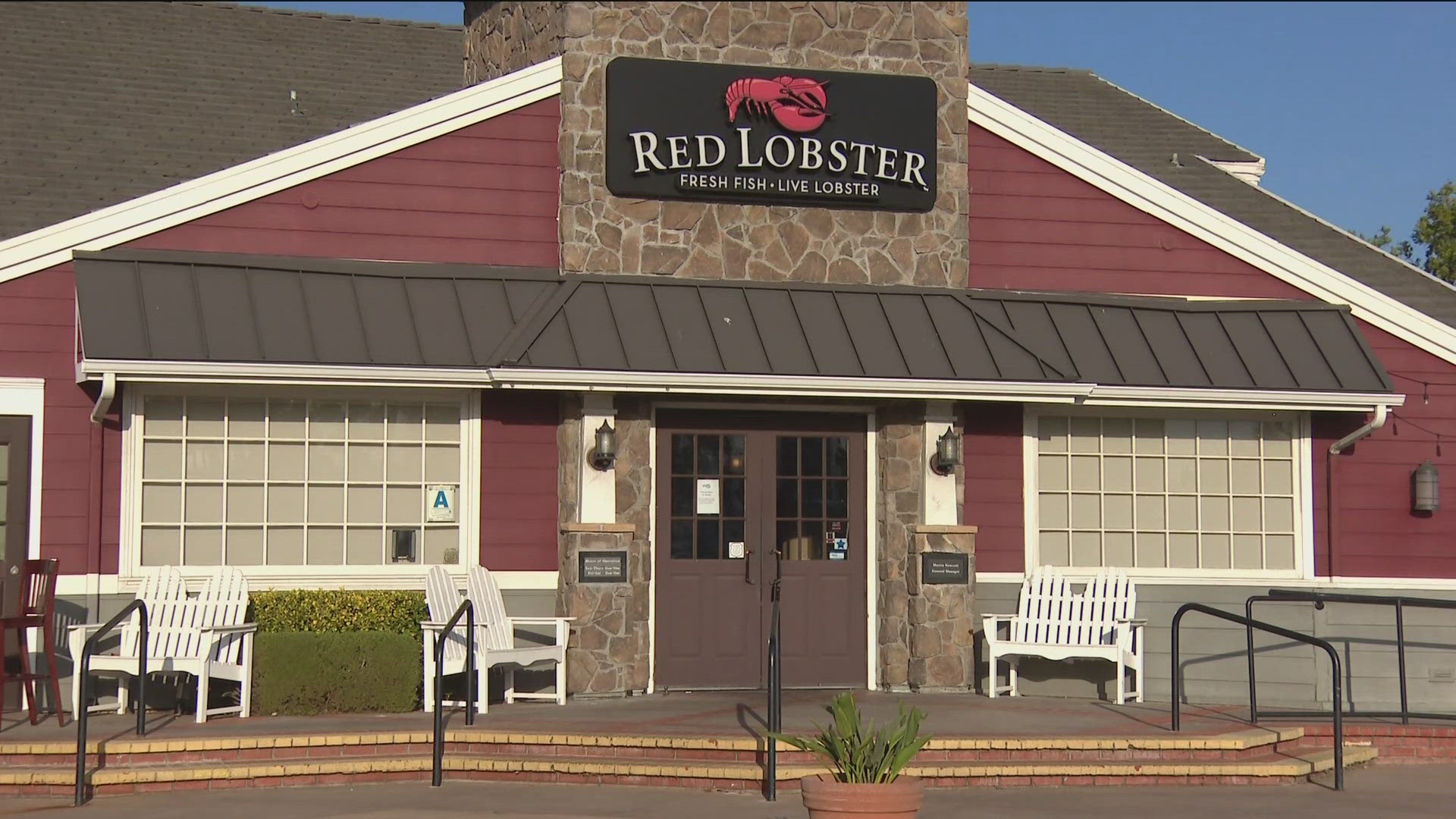
The impact of private equity companies taking loans or dividends recapitalizations, that stress debt levels are seen. These issues were present in both Red Lobster (selling real estate and a corresponding new rent burden) and Rubio’s (sponsor took a loan). Not all private equity firms do this of course.

There are more to come. For an engagement recently, I identified one public brand that is shaky, one brand holding company, three major franchise brands, and four non-public brands as very risky.  Overall, we need more attention to balance sheets, which are always less visible.

Starbucks and Chipotle: What to do?

The movement of Brian to SBUX and the stock declines at Chipotle speak to the key leader factor. SBUX stock gained the most ever on August 13, CEO announcement day, when Brian’s move was announced. Starbucks requires much more customer segmentation studies than what we have heard. During Laxman’s administration, the quality of earnings call disclosure deteriorated. In the US, the essential tension is between “maintaining the coffee focus” versus new products. In my opinion, since the addressable market, particularly in some age cohorts has changed, new product and concept development is critical. The Starbucks slow and expensive can be fixed.  I know how.

The China question is a key issue for Brian, the Board, and the China division leadership. One reality is that the China market is flooded by lower-cost and expanding brands like Luckin. A coffee price war is underway, per Asia experts.  Should new unit expansion be curtailed? Would it pencil out to refranchise China to a great master franchisee? I can imagine the numbers but no one outside of SBUX has the real numbers and potential. What Starbucks has said recently has little backup and seems dated. This is where context matters.

About the author:

John A. Gordon is a restaurant analyst and management consultant, with long experience in operations, corporate staff (20 years), and via his consulting firm (21 years), Pacific Management Consulting Group. He works in investor advisory, earnings and economics, M&A review, brand organization reviews, and of course, franchising engagements. Call him to talk about your issues, he will have useful and actionable input. He is at (858) 256-0794, email jgordon@pacificmanagementconsultinggroup.com.

The Deal – Elliott Eyes Starbucks Campaign Amid Slump

The Paul Singer-led insurgent fund is engaging with the coffee chain, which joined our Watch List of possible activist targets after it cut earnings and revenue forecasts.

By Ronald Orol

July 22, 2024 11:42 AM

Elliott Management Corp. has accumulated a large stake in Starbucks Corp. (SBUX) and is agitating to improve the coffee chain’s stock price, The Deal has confirmed.

Consequently, Starbucks becomes a Direct Hit and comes off The Deal’s Watch List of possible activist targets.

The chain joined the list July 12 after it cut fiscal 2024 earnings and revenue forecasts and reported that store traffic slipped 7% during the quarter ended March 31.

Starbucks shares jumped 6% following a Wall Street Journal report issued Friday, July 19, suggesting that Elliott has been engaging with the company. The chain and activist fund could reach an agreement privately soon, the report added.

Even with the spike, however, Starbucks shares are down 23% and 20% over the past 12 months and five years, respectively. Shares dropped significantly after the chain issued its dismal April 30 quarterly report.

It’s unclear whether Elliott, which declined to comment, may seek to shake up Starbucks’ board. The two sides could be negotiating over directorships.

Board Refreshments

There are several red flags associated with Starbucks’ directors.

No director on Starbucks’ 11-person board has direct coffee industry experience and only one, Richard E. Allison Jr., a former Domino’s Pizza Inc. (DPZ) CEO, has direct experience in quick-service restaurants, according to relationship mapping service BoardEx Inc.

Allison joined the board nearly five years ago, making him a newbie relative to board chair Mellody Hobson, who’s been a director for more than 19 years and could be considered overtenured. Hobson, a rare African American board chairman, has served as chair since 2021, and she has been co-CEO of Ariel Investment LLC, an investment management firm, since 2019.

Starbucks’ board could be vulnerable because it doesn’t contain anyone with multi-unit coffee chain or small-box retail experience, explained John Gordon, principal at Pacific Management Consulting Group.

“That isn’t right,” he said. He added that Allison is a positive board member, as he has QSR experience, including supply chain expertise, which is important.

However, Gordon noted that Domino’s and Starbucks are very different. “Domino’s has a supply chain in it, but they are talking about pizza and dough. Coffee is very different,” he said.

Gordon added that Starbucks should be able to find top-level former executives at other key coffee chains, such as Tim Hortons, Costa Coffee or Luckin Coffee Inc., which competes with Starbucks in China. “From a cultural standpoint, it is essential to have someone from China on the board because Starbucks has major competition from Luckin,” Gordon said, noting that China is Starbucks’ largest market outside the U.S.

In addition, a conflict may be emerging between CEO Laxman Narasimhan, who was installed in the top position in March 2023, and the Starbucks founder he replaced, Howard Schultz. A 1.9% holder, Schultz has held the title of chairman emeritus since September, though he noted recently that he doesn’t receive internal financial information about the chain.

The Starbucks founder has made some comments suggesting he could start agitating. Speaking on a June 3 episode of the podcast Acquired, Schultz said he can’t ignore a situation where the “company is doing a drift towards mediocrity,” and if that occurs, he would “hold leadership and the board accountable.” He added that “the company hasn’t executed the way that I think it should have,” though he added that he has no desire to return as Starbucks’ CEO.

Gordon said it’s essential to get Schultz back on the board. He added that perhaps Starbucks could install Schultz in a nonvoting but participatory capacity “where he could have a lot of influence but not overly dominate the board.”

Elliott hasn’t followed through on a director battle at a U.S. corporation since its 2017 contest at Arconic Inc. As a result, one adviser in the activism category said Elliott is “very aware” that it needs to do another serious campaign to keep its “fear factor.” The director nomination deadline for Starbucks’ annual meeting expected in May is Nov. 13. Even so, a contest at Starbucks would be a major undertaking for Elliott, as the chain has a $90 billion market capitalization.

In addition, Elliott hasn’t filed an activist 13D filing, and it’s likely the activist investor has accumulated a large cash-settled equity swaps position, rather than common shares, to back its campaign.

Nevertheless, it’s possible Elliott could be seeking to partner with Schultz to launch a campaign seeking to install the coffee chain’s founder in a full-time director role. Insiders, other than Schultz’s near 2% stake, hold very few shares and Starbucks’ three largest holders are Vanguard Group Inc.BlackRock Inc. (BLK) and State Street Corp. (STT), with a collective 18% stake.

Activists often push retailers to franchise locations, as a means of raising capital for debt reduction or share buybacks. For Starbucks, however, franchising isn’t seen as a viable solution. “There is no question that it would not pencil out,” Gordon said. “[In the U.S.], you cannot take a Starbucks company store now, which is averaging a 20% contribution margin, and make it work with a 5% royalty — which would essentially be the franchise contribution — coming in.”

Elliott Pivots Towards Operational Activism

It’s likely Elliott has privately launched an operationally focused activism campaign at Starbucks, even though the activist fund often encourages M&A as part of its efforts. Elliott appears to have partly pivoted toward operationally focused activism campaigns, as the M&A market has slowed, Barclays plc global head of shareholder activism Jim Rossman said.

“Look at Elliott Management, a bellwether of where activism is heading. Their campaigns in the first half of 2024 are focused on governance, operational and management changes,” Rossman said.

Paul Singer’s activist fund produced 11 campaigns in the U.S. and globally in the first half of 2024. Three of Elliott’s biggest campaigns of 2024 — at Southwest Airlines Co. (LUV), Texas Instruments Inc. (TXN) and SoftBank Group Corp. — have all steered clear of M&A demands.

In June, Elliott launched a campaign urging Southwest to reconstitute its board and bring in new leadership from outside the airline to address share price performance.

At Texas Instruments, Elliott expressed concern that the chipmaker risks building more semiconductor production capacity than it needs if it continues to press ahead with a capital spending plan it announced in 2022. Also in June, Elliott initiated a campaign at SoftBank urging it to authorize a $15 billion share buyback.

Nevertheless, Elliott has kept M&A as part of its agenda in some situations.

Goodyear Tire & Rubber Co. (GT), for instance, on Monday said it will sell its off-the-road tire business to Yokohama Rubber Co. Ltd. for $905 million. The sale comes after Goodyear in January named a new CEO after it launched a strategic review for some noncore assets including the OTR tire business. Two activist portfolio managers at Elliott greeted the M&A review, launched in November, as a “significant step towards a stronger and more profitable” company.

Starbucks declined to comment.

The San Diego Union Tribune – Rubio’s, Still In Bankruptcy, Finds A Buyer

The Carlsbad-based chain’s lender, which was the only bidder, agreed to a purchase price of $40 million.

Rubio's Coastal Grill, which filed for bankruptcy in June, has found a new owner. (Rubio's)
Rubio’s Coastal Grill, which filed for bankruptcy in June, has found a new owner. (Rubio’s)

UPDATED: 

Carlsbad-based Rubio’s Coastal Grill, which just two months ago filed for bankruptcy protection after shuttering dozens of its restaurants, has found a buyer.

An affiliate of TREW Capital Management, which was Rubio’s lender, has agreed to purchase the decades-old taco chain for $40 million.

The firm, run by Jeff Crivello, the former CEO of Famous Dave’s, effectively used a portion of its outstanding debt to acquire Rubio’s. Because there were no other bidders, a planned auction was no longer necessary.

Founded 40 years ago, Rubio’s is a fraction of what it once was. Just days before filing for Chapter 11 bankruptcy, the company’s owner, Mill Road Capital, abruptly closed 48 of its restaurants, 13 of them across San Diego County. The remaining restaurants, most of them in California, number 86, less than half of the company’s once nearly 200 restaurants.

With the sale, which still must be formally approved by the bankruptcy court next week, the familiar Rubio’s restaurants will continue to operate, as they are now, but it remains a question as to how many will remain, said San Diego restaurant analyst John Gordon. Much of it will depend on customers’ willingness to continue patronizing the chain, especially in San Diego, he said.

“There is certainly some residual pride of Rubio’s in San Diego, but the company has lost so much money and now has to switch owners so that means there is a strand of uncertainty about Rubio’s in San Diego because they’ve already been through two bankruptcies,” Gordon said. “Hopefully, the sales trends in San Diego are higher than at other stores. but we don’t know what will happen or what will even happen to the Carlsbad corporate office.

“Rubio’s could have a sales challenge due to the news of the previous closings and the Chapter 11 filing because potential guests will assume they are closed.”

The chain previously filed for bankruptcy in 2020. At the time, then-Chief Executive Marc Simon said the filing was largely triggered by the COVID-19 pandemic.

Gordon said he expects the chain will need an infusion of money at some point. According to an article in trade publication Restaurant Business, Crivello had a reputation, when he was heading Famous Dave’s, of aggressively going after restaurant chains he could snap up at budget prices.

At the time of its Chapter 11 filing, Rubio’s said its assets were $10 million to $15 million, while liabilities were $100 million to $500 million. The number of creditors could be as high as 25,000, the company said in its filing.

Originally Published: 

Franchise Times – Will Andy Wiederhorn’s Criminal Indictment Impact Store Sales, Twin Peaks’ IPO?

Emilee-Wentland-600px.jpg
By: Emilee Wentland

The years-long investigation into FAT Brands chairman Andy Wiederhorn and his company continues, though the situation doesn’t appear to be impacting franchisees and it’s unclear if it will affect a potential Twin Peaks public offering.

The U.S. Securities and Exchange Commission and the U.S. Department of Justice charged FAT Brand’s former CEO in May, claiming Wiederhorn misappropriated company money for personal expenses. Wiederhorn, who remains company chairman, and others were criminally indicted in Los Angeles by a federal grand jury for tax evasion, wire fraud and other counts.

From what I’m told, these charges aren’t bothering franchisees or impacting their sales. It’s important to note FAT Brands provided me with these franchisee comments. None of the 10-plus franchisees I contacted agreed to an interview.

“Sales at our locations remain strong as the general consumer is focused on the food itself and the experience—not outside noise,” Fatburger franchisee Spike Garcha wrote. “We look forward to continuing our long, fruitful relationship with the FAT Brands team.” Garcha signed a 14-unit development deal in 2022 in Florida.

“I have seen it all—the beginning of the acquisition activity, the formation of FAT Brands, FAT Brands going public, and so on,” wrote Frank Di Benedetto, CEO of FDF Restaurant Brandz, which started in 2005. “I respect what FAT Brands has built under Andy’s leadership and I am proud to be a Fatburger franchisee.”

Funding a ‘lavish lifestyle’

The gist of the parallel investigations is Wiederhorn received $47 million in distributions that were recorded as shareholder loans and subsequently forgiven, in order to evade personal income taxes. Former FAT Brands CFO Rebecca Hershinger and Wiederhorn’s tax adviser, William Amon of Andersen, were also criminally charged.

In 1998, Wiederhorn founded Fog Cutter Capital Group. He started subsidiary FAT Brands in 2017. Fog Cutter owned 80 percent of FAT’s shares and the two entities merged in 2020.

FAT Brands issued a $30 million promissory note to Fog Cutter after Fog Cutter transferred ownership of Fatburger and Buffalo’s Cafe (FAT’s only two brands at the time) following the 2017 IPO. The $30 million was paid off by September 2018, according to court documents, but Wiederhorn allegedly continued transferring “millions of dollars” to Fog Cutter. The SEC alleges FAT Brands loaned Fog Cutter $28.3 million between July 2018 and December 2020, about $20 million of which was used to fund personal cash transfers to Wiederhorn.

“These transfers included payments for private jets, first class airfare, luxury vacations, Wiederhorn’s mortgage and rent payments, and nearly $700,000 in shopping and jewelry,” the government alleges

Wiederhorn, the subject of a Franchise Times cover story in 2018, pleaded guilty in 2004 to federal tax charges involving another company he ran, Wilshire Credit Corp., and spent 14 months in prison.

Wiederhorn’s attorney, Doug Fuchs, said his client had a “legitimate shareholder loan agreement with Fog” since 2010. In 2018, “Fog entered into a new shareholder loan agreement with Mr. Wiederhorn on the same terms. FAT was not a party to and was not otherwise involved in these shareholder loan agreements,” which were disclosed to investors, Fuchs said over email.

Fuchs says the promissory note was “extinguished at the demand of a third-party lender” in 2018. Fog Cutter apparently agreed to trade the outstanding balance for FAT stock so FAT could purchase Hurricane Grill & Wings. From 2018 to the 2020 merger, FAT loaned money to Fog Cutter, Fuchs said. “The intercompany loan proceeds were used to help pay Fog’s debts and fund the shareholder loan between Mr. Wiederhorn and Fog,” he wrote.

FAT Brands declined to comment on the charges.

Potential overhang

Twin Peaks, one of FAT’s 16 brands, is exploring an IPO. The impact of FAT’s and Wiederhorn’s legal mess on the valuation is unclear.

“The overhang because of Andy might be best defined as the unknown, in terms of if Andy is found guilty, what happens to FAT Brands’ capital structure,” said John Gordon, a restaurant analyst at Pacific Management Consulting Group. “There’s a complicated capital structure of loans that has fueled the growth of FAT brands, really starting during the pandemic.”

Twin Peaks CEO Joe Hummel told Franchise Times in June the brand is “unaffected” by the legal issues. “We are very siloed and pretty much stand on our own as a company without shared services,” Hummel said. “Because of that we have been able to operate successfully with the platform above us but really on our own.”

Prior to the charges, Gordon said he was unaware of “all of this internal money being shifted back and forth to Fog Cutter.” He continued, “What I could gather is that there’s a lot of debt supported by the EBITDA. So the goal of this IPO is to sell it and then to take the proceeds, or at least most of the proceeds, and then to pay down debt. And that’s a very solid financial strategy.”

Brand leaders often do a “road show” prior to an initial public offering “to display the wares of this new IPO,” Gordon said. “Is Andy really going to feel comfortable going out on a big road show given his current status? That’s what I see the issue to be, but most of the attention will be on the quality of the earnings to date.”

Wiederhorn did present June 27 during a virtual equity conference hosted by investment bank Noble Capital Markets. The company, he said, is on track to do about $2.5 billion in systemwide sales across all its brands this year, and “we hope to see Twin Peaks as a public company at the end of the summer.”

FAT Brands’ stock price fell from $7.58 May 9, the day before charges were made public, to $5.42 May 10—a 28 percent decrease. Share price varied through mid-July, but stayed below the May 9 high.

What comes next? Federal prosecutions aren’t known for their speed. Wiederhorn noted in his Noble presentation he doesn’t expect a resolution with the SEC until 2025 or 2026. That’s a sizeable shadow being cast over Twin Peaks’ potential valuation and FAT Brands as a whole.

Emilee Wentland is managing editor of Franchise Times, and writes the Continental Franchise Review® column in each issue. Send interesting legal and public policy cases to ewentland@franchisetimes.com.

Wray Executive Search – Restaurants: Big Bets Underway

by John Gordon, Principal and Founder, Pacific Management Consulting Group

The restaurant universe has always been dynamic, variable, “up and down, back and forth,”[1] exciting, hard to predict, characteristic of individual brand booms and busts. However, it always remains investible year after year; there is always something to do to react to or prepare for the next cycle.  

The summer of 2024 to date has been an amazing time. We have the most consumer,  perspective, investor, restaurant history, data, and systems information that we ever have had. We are still being rocked by the Pandemic. We should be overjoyed that we survived the Pandemic, and many foundational factors have improved. But time waits for no one.

There is always the battle between short-term interest, benefit, and actions, and long-term interest, benefit considerations, and actions. It is up to the best CEOs Boards, and management teams to navigate that line. Right now, we have a lot of big bets underway.

Current Consumer Environment Weak

The current consumer environment is on edge about all kinds of things. The political news of late, President Biden’s withdrawal from the race, and news from the GOP convention is an influencer. So the fact that even QSR restaurants are considered a “luxury” by some is telling. Significant Is the fact that restaurant pricing hasn’t slowed up much and is still exceeding grocery store inflation by 400 basis points[2]. That is not helpful. Part of the price problem is due to the heavily franchised state of many brands; the individual franchisee has to cover OPEX and CAPEX costs and meet remodeling and new unit growth standards set by the franchisors. They do not have the same access to capital that the franchisor has.

Looking at June/July, consumer spending in restaurants is not the best, but not a disaster. Some brands/segments are better off. Sara Senatore at Bank of America has reported the Bank of America credit data and Bloomberg Second Measure, which track debit and credit card activity, among other indices. Median consumer spending was up 2.2% in June, versus 5.0 % in May. IT IS NOT A NEGATIVE VALUE, but momentum went side to side. The index was up in May. Recent restaurant spending spikes occurred in December 2022 and 2023, with generally descending values through each year. Bank of America data showed full-service restaurants as a whole remained positive and grew slightly to plus 1.8%. Fast casual was positive but marginally down in June. (see Chipotle (CMG), Shake Shack (SHAK).

QSR (less pizza) fell from .1 % positive to  -1.4% negative. QSR July spending for a 6-day month shows a 1.1% deterioration.[3]

The overall economic backdrop remains the same. Despite a strong economy and job growth, usually a prime driver of restaurant sales, reported and expected same-store sales (SSS) remain depressed for many brands. Note total sales are up.  The University of Michigan Consumer Confidence number last month fell to 66, versus app. 100 in 2019. Sour moods and perceptions hurt us.

“Houston we still have a problem”: Too Many Restaurants Continue

While there is no central coordination in this vast industry, and capitalism supports growth, the US still produces too many restaurants versus population growth. Still. The Bureau of Labor Statistics produces the unit count growth (both chains and independent), and the US Census Bureau produces the population growth.

US population growth has been very modest over the last decade and 3 years. The Census estimates show population growth of only .98%, not quite one full percentage point from the 2023 year-end versus 2019 year-end projected.[4]  

At the same time, the number of restaurants in the US grew from 654,217 in 2019 to 711,15 at year-end 2023, a simple average growth rate of 8.7% over that period. [5] 

[Yes, independent restaurants are included, no these are not CAGR numbers but those can be run.]

Naturally, it is hard to get US SSS traction with this as an additional limiting condition. That’s why international growth (Memo to Darden $DRI: you’ve got to!). New brands will get consumer attention (see Cava $CAVA). All brands need to have powerful unit economics and differentiators that speak to the desirable core and aspirational guests.  In my opinion, the onus falls to public brands and especially franchisors to manage unit growth numbers; the US unit growth expectations need to be measured. 

The McDonald’s Big Bet in the US

McDonald’s takes the stage prominently always because it is the US’s leading QSR brand, it has built management systems, brand marketing, and identity; along with economic success over time. Many of its franchisees have prospered and grown as well. McDonald’s has raised the issue for the last six months that there would be sales softness in the US, and softness with international franchisees due to global events and political backlash. They were most concerned with low-income consumers, especially those under $50K in household income. Eventually, this softness and McDonald’s initiated an industry price war.

So McDonald’s came up with a US $5 “Meal Deal” priced at $5 nationally, with some high-cost markets and territories at $6, which kicked off in late June.  Unfortunately, compared to the great creative and product work done in 2021 and 2022, in my opinion, it was an offer without pizzaz, not smashing. It did not have much of a creative or social pop. There were no creative products. It was cast as a 30-day LTO, but that may expand. McDonald’s did not design a bar-bell approach with products and pricing. It seems to me it was just communication that McDonald’s has lower prices.  To its credit, McDonald’s later rolled out a new sauce and an MCD Smoky BLT Quarter Pounder (not available after midnight[6]). 

Of course, virtually every QSR brand was discounting too, many before MCD.

So we’ll see. There are varying opinions if this LTO should be kept longer. The franchisees I have talked to speak of heavy negative mix shifts, traffic improvement of some amount, and SSS either slightly up or down overall. The problem with this is even a small sales increase will likely lead to low or no profit flowthrough. Negative mix shifts always should have been considered. On the upcoming call, McDonald’s executives will talk to franchisees “cash flow”, and EBITDA-like numbers, and that they had a traffic uptick. The more significant issue is what does MCD US do to fix this price perception problem in the intermediate term. I hope it involves better, more sophisticated marketing, and hope that MCD product development can get new product new news out into the mix.

Meaningful M&A Breaks Out

Restaurant Companies react in all kinds of ways to the environment.

Darden (DRI) announced a not-unlikely acquisition of Chuy’s (CHUY), the Tex Mex southwestern-based company, in an all-cash deal of $605M in cash. The stock price offered was a 40% premium the the pre 60 day trading value. The EBITDA value is appx. 10.3X. Very quickly, Darden announced $15M in likely synergies. CHUY AUV is $4.5M and restaurant margins of 20%. Total acquisition costs are projected to be a hefty $50 to $55 million. Darden expects that the acquisition will add 12 to 15 cents/EPS share by 2027.

Investors and analysts should not be surprised by Darden’s portfolio management. It is always more efficient to buy a brand with potential, rather than build it from scratch. It is what Darden does. The question always is what kind of growth CHUYs can attain, synergies and how quickly can the acquisition costs be amortized, and get to free cash flow. And how does the new brand square with core and aspirational Darden guests? Is it expandable to the numbers necessary? For the industry, this is more consolidation into powerful casual companies. Think of Darden’s marketing, site selection, and balance sheet. However, like other casual diners, its sales have been soft.  Uplift will be necessary.

Another interesting M&A report broke Friday that JAB/Panera was lining up to sell Caribou/Einstein/Brugger’s Bagels, Noah’s New York Bagels/Manhattan Bagels. JAB made these acquisitions in a coffee lead acquisition phase in XXXX. The deal’s EBITDA value was reported to be $150M (based on 2000 total worldwide units, including 800 Caribou units in the US), and a hoped-for $1.5 billion.

We don’t have financials or international unit counts. US franchise disclosure documents are useful. So anything is possible and potential. However, we don’t get the reported logic that JAB wants to sell the coffee/bagel brands BEFORE that of a listing, IPO, or otherwise of Panera. The listings could crowd out demand or influence multiples in an unfavorable way. Panera is the jewel. More to ponder and watch.

More: Starbucks has picked up an activist: Elliott Investment Management.

It was logical that pressure would be on SBUX before long, what with its US and China sales problems. And its store margins are down, due to dramatic labor and benefit investments and OPEX/CAPEX for new equipment to realign store workstations. SBUX has socio-political perception problems in the US (in the wake of the just concluded SEIU battle and internationally in some markets due to the crazy perception that Starbucks was influencing US foreign policy in the Gaza war. Starbucks has been reacting to the waves of business, consumer, and store economic changes from the Pandemic. Then, in the fall of 2023, US guest frequency fell off in some Gen Z cohorts due principally to price and political sensitivities.

See my quotes in The Deal on July 12, 2024, relative to SBUX problems and potential activist investors. I thought someone, but not Paul Singer.  He was busy at Southwest Airlines and never had a retail multiunit campaign other than Barnes and Noble, which it acquired in 2019.  Barnes and Noble are on the mend with a UK bookstore CEO as the joint combination book entity CEO. No restaurant engagements were seen.[7] Its investments are all over the business and a whirlwind of sectors. Elliott has a few hundred employees who are no doubt good spreadsheet people and can envision strategy. Starbucks is talking to them, without Howard Schultz on the Board.

P&L Notes Seen

In watching earnings results at Pinstripes, the company provided commentary that heavy startup costs, particularly labor affected company earnings. Large amounts of new employees are hired at company-owned concepts—and franchise brands—during the early ramp-up period. It’s been my long observation that such overstaffing—even after training–might not be necessary. Yes, employees will quit and others weeded out by hours of control. However, employees working in too easy of an environment might foster unrealistic expectations later. An area to think about.

US Restaurant metrics: Restaurant Research has published a brief note with good news. It noted that the top billion-plus brands had a small EBITDAR unit improvement to 18.6%  in the second half of 2023.  Franchise leverage on the whole was not stretched, although some of the recent wave of restaurant Chapter 11s are not in the data. Write to Restaurant Research for more of their valuable data.    

 About the author:

John A. Gordon MAFF is a long-time restaurant analyst and management consultant. With unit operations, 20 years of corporate staff experience, and 21 years via his consulting firm, Pacific Management Consulting Group, he has the knowledge and gravitas to work complex analytical engagements efficiently for clients.  Call him at (858) 874-6626 or email, jgordon@pacificmanagementconsultinggroup.com

[1]   Credit to Sara Senatore, Bank of America, July 2024.

[2]   There is a line of logic, that deserves further review, is that the “price paid” survey is overstated and is influenced by tipping and sales tax. Hat tip: Wally Burkus, Restaurant Research, June 2024 

[3]   From Sara Senatore security analyst reporting July 2024  

[4]   Census Bureau, www.usafacts.org

[5]   Bureau of Labor Statistics, year end 2023 tables.

[6]  MCD website.

[7]   See a summary list of historical Elliott investments in Wikipedia, Elliott Investment Management.

The Deal – Activist Target: Starbucks May Need An Extra Shot Of Activism

Starbucks is the world’s largest coffee house with over 20,000 stores.

An insurgent investor could help the coffee giant reshape its board and accelerate operational improvements to satisfy, and win back, customers.

By Jean Haggerty

July 12, 2024 09:24 AM

Please click here to read the full article: https://pipeline.thedeal.com/article/00000190-a1a4-d933-adf3-b3ede6890000/deal-news/features-and-commentary/activist-target-tarbucks-may-need-an-extra-shot-of-activism

Wray Executive Search – Restaurants: How Did We Get Into This Pricing Problem?

by John Gordon, Principal and Founder, Pacific Management Consulting Group

Early in our management careers, we were taught to “manage what was measured”. As we grew more senior, that modified slightly into “measure what matters”. Whether we were at start-up, private or public firms, the essence of key restaurant success factors remain the same: sales, comps, restaurant level margin, unit growth, free cash flow, ROIC, franchisee profitability. Unfortunately, the SEC patterned income statement shows a simple this year/last year format.  So that is what comes into our mind first. We as an industry took the easy way out: we took a lot of price: over 30% in LSR restaurants and a bit less in FSR restaurants from 2019 to present.

This set the stage for our current conditions.

The signals of consumer price sensitivity showed up everywhere in 2023. Darden (DRI) two quarters ago noted less alcohol sales mix and then last quarter negative SSS at all brands but one; McDonald’s, then coming off a great 2023 warned of weaker lower income guest mix for 2 quarters earlier and finally poor Q1 results; Wendy’s two quarters ago mentioned in their call they would test dynamic pricing and social media and then mainstream media blew up; and then Starbucks (SBUX) reported both US and China weakness as we noted last month. Not all of the SBUX variance was due to pricing.

Food at Home, e.g., grocery store inflation plunged, while restaurants continued taking price. That trend continued throughout 2023 and 2024 to date. We restaurants did have horrendous food and labor P&L shocks to cover, along with higher interest rates and CAPEX for new units and equipment in 2021-2022, with 2023 moderating food cost inflation.    

Looking back to Quarter 1 earnings , a review of the transcripts reveals except for the standout brands—Texas Roadhouse (TXRH), Chipotle (CMG), CAVA (CAVA), Wingstop (WING), Dutch Bros (BROS)—that many CEOs reported getting pressure on pricing.

Most major restaurant brands are featuring price currently. McDonalds (MCD) took considerable time to get a late June $5 30 day LTO Burger or Chicken package in place.  A problem is Burger King got their offer approved by franchisees more quickly and is on the street now, beating McDonald’s.  Franchisee intelligence sources expect that the $5 MCD LTO will become permanent. Olive Garden now is running a $12.50 “Create Your Own Pasta” offer on TV highlighting the usual brand benefits. [1]  There is no such rumoring about a permanent $12.50 platform at Olive Garden, it would be contrary to years of CEO guidance.

In a telephone interview, my friend, Lisa W Miller, CSP, consumer insights strategist and expert, who I trust greatly, wondered if this discounting deluge was too late. Too little, too late, actually. More work had to be done on the value side as opposed to the pure price side. [Lisa W. Miller & Associates, https://www.lwm-associates.com]

NRN’s Joanna Fantozzi wrote a great analytical piece[2] in May compiling several analytical reports and sources. The conclusions were that price is a subset of value and are closely related; that both about half of guests in 2020 (50%) and 52% in 2024 picked restaurants with lower prices. The exact same percentage of guests (68%) said they pay close attention to menu prices in both Q1 2020 and 2024. [3]  HundredX data shows price perception has gotten much worse in the last six months, especially QSR brands, but that value has only slightly declined.[4]  Both Sysco (SYY) and US Foods (USFC) noted the falloff of chain QSR cases sold in their recent investor days. [5]

I am wondering how do we get out of this “price problem” cleanly. For those brands that do a lower priced LTO, eventually the LTO can end when market conditions improve. For those QSR brands that overindex with lower income guests, how do you move away from a fixed price value platform in say, 3 years, when needed. Casual dining does not seem to have this problem. This should be a signal to Wall Street.           

So, in my opinion, we got to this pricing problem by taking automatic price increases and not looking elsewhere in the P&L more to cover expenses. Operators did not help by installing “tip me” software almost everywhere, although the reason for that is understood. We should have moderated price immediately once grocery store inflation fell in 2023. But that is a hard thing for a decentralized franchisee centric QSR segment to do.

Red Lobster, Rubio’s and the spurt of other Restaurant Bankruptcies: What is up?

Everything relates to everything else of course, and the general industry sales, traffic and profit weakness took their toll on these two brands. We are NOT in “Restaurant Apocalypse”; these brands had long standing problems. 

Red Lobster was Darden’s original brand and seems to have began its long decline in the early 00s. Under CEO Clarence Otis, Darden used LTOs and a mix of coupons and FSIs to sustain business. But financial visibility during calls was poor and Darden’s attention was on Olive Garden, and later Long Horn. It was impacted by the 2008-2009 recession like all casual dining operators. It overindexed with older guests who responded to discounts.

Red Lobster became a lighting rod in the 2014-2015 Starboard v. Darden proxy battle. Darden sold Red Lobster and its underlying real estate for $2.1 billion before the proxy shareholders vote to PE firm Golden Gate Capital Group in 2015. Golden Gate immediately sold the real estate to a REIT. Red Lobster then had to assume rent and other lease expenses for the first time. That was a significant blow to the P&L. Later, by 2020, Golden Gate sold its entire stake to Thai Union, a seafood supplier. While Thai Union had international restaurant partners, they did not have US casual dining experience. Red Lobster’s long time CEO, Kim Lopdrup retired in 2021, and Thai Union was unable to recruit and keep a industry veteran CEO afterwards. Internal struggles at Red Lobster cumulated in a money losing $20 “All Day All You Can Eat Shrimp” offer. The Red Lobster bankruptcy documents revealed an on going investigation regarding machinations and potential fraud in the supply chain benefitting Thai Union, who became its exclusive seafood supplier.

Red Lobster has closed about 100 units to date with app. another 100 units “on the bubble” pending lease negotiations prior to Bankruptcy Court rulings. That would still leave a significant national presence, but with a tremendous amount of work to do. Law360 has reported a logical linkage with Fortress PE and SPB Hospitality as a logical bidder through bankruptcy.

Rubio’s goes for Chapter 22: Rubio’s was one of the first fast casual dining restaurants, opened in 1983 in San Diego. Growing in Southern California in the 1990s via IPO in 1999. It went private in 2009 via a $91 million buyout by Mill Road Capital, with 195 units at the time. Via my conversations, Rubio’s made a cluster of bad development in the late 1990s and early 00s and could not grow out of the Southern California. Some have speculated its Baja Mexico theme did not work away from the coast. Rubio’s continued to close a modest number of units annually until 2020, when the first Chapter 11 was filed. 26 units were closed and leases were reworked.

After April 1 2024, none of us in California were surprised to see marginal restaurant operators close. This is a result of the $4 wage hike, AB-1228. Rubio’s closed 48 company units and may close more. Not surprisingly, franchisees have to continue operating, which is not right, but correct. If these units close cleanly, Rubio’s will have 86 units left in CA, NV and AZ. Similar to Red Lobster, new management and funds will be needed. The media reports alone will drive down Rubio’s sales for months.

Other restaurant bankruptcies are on the cusp—public BurgerFi, Tijuana Flats, Oberweis for example.

Building Company Culture Remains Critical

In this period of high stress, with  focus on the top and bottom line, the top performing company companies work to achieve a blend of being the most attractive and rewarding places to work. One of my close friends and colleagues, Mr. Mac Brand shares with us a venue from his new book, Tending to your Garden (2023), Building and Sustaining Business Relationships  

Mac explains one of his projects where he begins to build and identify identity charts that organize field and corporate staff members by contributory function to ease communications and blockages. See more at  www.bellwetherfoodgroup.com

About the author: John A. Gordon is a long time restaurant industry veteran with experience in restaurant operations, corporate staff (20 years in FP&A) roles) and 23 years now via his founded management consultancy, Pacific Management Consulting Group. He is a certified master analyst of financial analysis, (MAFF), and works complex financial analysis roles for clients.  

[1]   Cable TV watching, ION Network, June 9 2024.

[3]   Id. Technomic data.

[4]   Id. HundredX data, Andre Benjamin.

[5]   Restaurant Business, “Fast Food restaurants are hit hardest as customers cut back”, May 23 2024.

The San Diego Union Tribune – Hometown Taco Chain, Rubio’s, Shuts 48 Locations

Company blames higher fast-food employee wages

0000018f-e024-d0a9-af8f-f02c5b210000_1079522204.jpg

San Diego-founded Rubio’s Coastal Grill has closed 48 California locations. Thirteen of the closed restaurants are in San Diego County, including the one in Kearny Mesa, above. K.C. Alfred / U-T
By Lori Weisberg

A fast-casual staple in San Diego County since its founding in San Diego 40 years ago, Rubio’s Coastal Grill has abruptly shuttered 48 of its California restaurants — 13 of them in San Diego County.

The decision, which took both customers and employees by surprise, was driven by the rising cost of doing business in California, the company said in an emailed statement. Rubio’s, like other California chains, has been affected by the recent wage increase for fast-food employees, who are now paid $20 an hour as of April 1. That represents a 25 percent hike over the current $16 minimum wage in California.

“Making the decision to close a store is never an easy one,” said the statement provided by Strick and Company, a crisis management firm Rubio’s is using to communicate with the media. “The closings were brought about by the rising cost of doing business in California. While painful, the store closures are a necessary step in our strategic long-term plan to position Rubio’s for success for years to come.”

The closures, which were effective as of Friday, account for one-third of all Rubio’s restaurants.

The affected restaurants in San Diego are spread throughout the county, from Chula Vista to San Marcos. With the closures, there are now 29 restaurants remaining in San Diego County, including the original location on Mission Bay Drive in Pacific Beach that opened in 1983 as an homage to the original Baja California-style fish taco.

Even with 86 remaining Rubio’s outlets in California, Arizona and Nevada, the chain is a fraction of what it once was. A little less than four years ago, the company that boasts it’s the home of the original fish taco, had as many as 170 locations in the U.S.

In a highly competitive, low-margin market chock full of Mexican-themed brands, San Diego restaurant analyst John Gordon says that Rubio’s was no longer the cool kid on the block.

“Rubio’s is an older tired brand. It’s not cool anymore. Chipotle’s is cool, Cava is cool,” Gordon said. “Rubio’s had its day but once it left the publicly traded markets and (current owner) Mill Road Capital took it over, it went into maintenance mode. Ralph Rubio, the founder, continued to consult with them but nothing much happened.”

The biggest factor, though, fueling this latest evolution of Rubio’s, says Gordon, is the minimum wage hike for fast-food employees, thanks to legislation signed into law last year by Gov. Gavin Newsom. Some fast-food chains already have raised their menu prices in response to the wage increase.

“Without a doubt, the governor’s action, the union’s action on this Assembly bill action that dramatically raised the minimum wage to $20 with no phasing in was a dramatic shock to all fast-food restaurants in California,” Gordon said. “We knew it was coming, and the industry opposed it aggressively.”

According to an article in the trade publication Restaurant Business, Rubio’s has struggled noticeably in the past five years. The company, it wrote, averaged a 1.1 percent decline in overall sales during that time period, compared with a 10.4 percent increase for fast-casual Mexican chains in general.

Gordon said he wouldn’t be surprised to see Rubio’s forced into bankruptcy considering the potential debt it is facing from the closure of so many leased locations.

It wouldn’t be the first time.

In October 2020, the privately held Rubio’s filed for Chapter 11 protection to get out from under more than $100 million in liabilities. It already had closed a number of locations as it faced mounting debts and difficulty paying rent. And then, as the pandemic worsened, Rubio’s opted to not reopen 26 of its locations across California, Arizona, Colorado and Florida.

A pre-negotiated plan for restructuring the company’s substantial debt of more than $72 million was later approved by the U.S. bankruptcy court judge not long after the initial filing. As part of the plan, Rubio’s longtime lender agreed to provide $52 million in so-called “exit” financing. In addition, Mill Road Capital agreed to invest $6 million back into the company.

A company spokesperson confirmed that the locations below have been closed in San Diego County:

• 1480 Eastlake Parkway, Suite 901, Chula Vista

• 419 Parkway Plaza, El Cajon

• 1485 E. Valley Parkway, Suite A-6, Escondido

• 9500 Gillman Drive, Food Court, La Jolla

• 9187 Clairemont Mesa Blvd., Suite 7, San Diego

• 910 Grand Ave., San Diego

• 8935 Towne Centre Drive, Suite 100, San Diego

• 9254 Scranton Road, Suite 105, San Diego

• 2260 Callagan Highway, Building 3187, San Diego

• 7835 Highlands Village Place, Suite D101, San Diego

• 1158 W. San Marcos Blvd., Suite A, San Marcos

• 437 Highway 101, Suite 117, Solana Beach

• 1711 University Drive, Suite 110. Vista

Rubio’s workers had little advance warning of the restaurant closures. No formal notice was granted under what’s known as the Worker Adjustment and Retraining Notification Act, which requires a company — defined as an industrial or commercial facility — with 75 or more employees that is engaging in a mass layoff to notify its workers. However, the wording of the law is a little unclear as it applies to a company like Rubio’s where there are multiple locations, each typically employing far fewer than 75 workers.

On the online social forum Reddit, a number of Rubio’s employees complained that they did not receive advance notice of their termination, although one Reddit post noted that workers did receive their final paychecks upon learning that their place of employment was closing.

A spokesperson with the state Department of Industrial Relations advised any workers who did not receive their full pay upon closure of the restaurants to file a claim with the state.

lori.weisberg@ sduniontribune.com

CBS 8 – Red Lobster In Mira Mesa Is One Of More Than 100 Closures Across US

The restaurant in Mira Mesa is one of up to 120 location closures throughout the U.S.

Red Lobster in Mira Mesa is one of more than 100 locations closing across US

SAN DIEGO — The popular restaurant chain Red Lobster is in the red, and could soon file for bankruptcy protection.

On Monday, the Florida-based company shuttered dozens of its locations, including here in San Diego.

Mira Mesa

The Red Lobster in Mira Mesa is one of up to 120 location closures throughout the nation. A restaurant supply liquidator plans to auction off their kitchen equipment.

While there are still a couple of other Red Lobsters here in San Diego County still open. What their future holds is uncertain.

This sudden shut-down in Mira Mesa was one of the dozens of abrupt closures nationwide on Monday. It was an unwelcome surprise for loyal customers.

“I assumed they were doing pretty well because they’re always advertising.,” said San Diegan Jayden Douglas, who showed up to the Mira Mesa location only to find it closed. “If they have money for commercials, I’d assume they have enough to keep their company open?”

While the company is still open, Red Lobster is considering filing for bankruptcy protection, as first reported by Bloomberg.

One of the company’s recent financial missteps:  its all-you can eat “Endless Shrimp” promotion rolled out last summer that contributed to $20 million in total losses for the fiscal year.

“Way too many people participated at way too low a price.,” said restaurant analyst John Gordon, founder of Pacific Management Consulting Group based in Sa Diego. “And so the gross profit on that was way too low, and it caused Red Lobster to miss their earnings.”

Gordon told CBS 8 that Red Lobster’s financial struggles started years earlier, though.

When it changed hands in 2015, its real estate was also sold, meaning that Red Lobster had to start paying rent for its locations: rents that keep rising.

“That put a cost pressure on to Red Lobster,” he added.

In 2020, a company called Thai Union assumed Red Lobster’s majority ownership.

“They just didn’t know what they were doing!,” Gordon laughed.

It has also faced the same challenges as many casual dining restaurants, especially since the pandemic.

Red Lobster in particular has attracted a somewhat older customer base.

“The issue with an aging customer base is that they go out less often  and they tend to be driven by coupons and special deals,” Gordon said.

Even if Red Lobster does end up filing for Chapter 11 bankruptcy, it would still be able to stay open. But it appears it could be with fewer locations to choose from.

Restaurant Business – Proposed TGI Fridays Sale Is No Home Run, But Has Promise For Both Sides

The $220 million all-stock deal would get Fridays’ owner TriArtisan out of its decade-long investment and give the struggling chain a like-minded partner in franchisee Hostmore, experts say.

Please click here to read the full article: https://www.restaurantbusinessonline.com/financing/proposed-tgi-fridays-sale-no-home-run-has-promise-both-sides


Wray Executive Search – Restaurants: Rough Waters for Now

by John Gordon, Principal and Founder, Pacific Management Consulting Group

Negative consumer and earnings conditions in January-February:  Sorry to say, but February chain SSS results were the weakest since 2021, same month per Black Box. That was bad enough. The factors: all the usual problems at this time of year, including bad weather, negative traffic, and secular weakness at virtually all casual dining and fine dining operators. And a few factors: average check rate declines. The industry has [mostly] slowed up price increases, so much so that ticket increases are not covering traffic declines as before. However, our pricing, lower as it may be, in March was 4.5%[1]  versus 1.0% food at home. [2]  So we are still in a poor position versus grocery stores. The February Black Box index was -.6% SSS and -2.3% traffic.  [January SSS was -4.5%]

Fast casual and QSR brands were marginally positive while, casual dining and fine dining were quite negative.   Even casual dining powerhouse Darden had marginally negative SSS in all reporting groups except LongHorn last quarter.

So, with some 45 years in corporate staff and management consulting FP&A roles and engagements, I have always been known as a pricing and margin recovery guy. But with the magnitude of pricing we have taken, and the inability of the consumer to deal with the cumulative price increases taken, we are in real trouble.

Michael Halen /Bloomberg View: K Shaped Is the Word

I asked my good friend, Michael Halen, the senior restaurant analyst at Bloomberg, to provide his perspective on consumers and restaurant sales trends.  Michael noted: “ A K-shaped economic recovery [upper track, lower track] and three years of aggressive industry price hikes may fuel a greater divergence between low and higher income consumers; and quick service and full-service restaurant sales.

Year-over-year comparisons will get easier in March and should give results a lift through year-end, but cross currents will affect chains to varying degrees. Weaker low and middle-income consumers, hurt by high credit card balances and delinquencies, could pressure casual dining chains more than quick service due to higher guest checks. Fine dining sales may pick up as the segment laps over weak 2023 results and high-income spending is buoyed by rising stock, home, and crypto values.”  Thank you mhalen1@bloomberg.net

Fast Food Pricing War Redux?

McDonald’s has led the way for the last two quarters warning of the weakness of guest traffic of the $45K and under income cohort. It can be the most powerful QSR marketer in the world, and its reference power across worldwide industry is immense. It is not reacting particularly creatively to the $45K cohort problem [big discounting across the menu under $3.99 has been announced], and the risk is another fast food pricing war could be set off. It seems to me that publicly traded franchisors get paid off the top line [and comps], although it is very true to note that MCD has very difficult compares in 2024 due to a very successful 2023. A pricing war, which sets back the industry, can be averted by true leadership and creativity at MCD.

How? The industry has used variations of a HI/LO offer strategy forever. The NOA franchisee association pointed out that MCD created lower-priced wrap products and others in the past exactly at the same time of need, but MCD has ignored that input.  With all the progress the industry has made in digital and targeted marketing tactics, a fast food war would be a very disappointing outcome in 2024, in my view.

Dispatches from the California Mess 

On April 1, California AB1228 went into effect that among other things, jumped fast food restaurants minimum wage [with more than 60 national locations] to $20, a $4 immediate jump. In my experience opinion, this jump will cause compressional wage increases throughout the QSR store crews and will affect other non-QSR restaurants as well.  The implications of AB1228 have been extremely well covered by local and national press.   Publicly traded restaurant brands with a concentration of units in California noted they would employ a mix of pricing and other tactical efforts to offset the negative margin effects.

Now, we have some early data in. Our friend Lauren Silberman at Deutsch Bank published a note on April 2 (DB, California Pricin) that reported on some brand’s CA pricing actions around 4/1. For example, Chipotle increased on average by 7-8%, Starbucks increased by high single digits on average, Mcdonald’s was largely unchanged,  Shake Shack was unchanged in April [but prices taken in March], Taco Bell took 3-4% price. JACK store pricing was mixed.  No price increases at Papa John’s. Only one of five Dominos units tracked took price. Sonic (Inspire) raised prices 3.5-4.5%. Other than one menu item adjustment at Olive Garden, the casual diners did not increase prices.  No CA price increases at Sweetgreen [earlier system price of 3% on 2/21], Cava or Wingstop [yet].

And more California analysis: my friend Lisa W. Miller is tracking California consumer conditions via her proprietary research systems. She has recent data just reported. Through Q1,   66% of California consumers have pulled back on dining out due to high prices, versus, 63% of the nation as a whole. And now, diners in California have proportionally pulled back in support of higher wages versus lower dining costs (39% in CA versus 43% in total US). 65% of CA consumers are concerned that laws that force higher pay for restaurant workers will drive menu prices higher. [3]

So, we will watch California carefully, but unfortunately, the stage is set for a sales and earnings drag there. Special visibility will need to be worked for the franchise brands, as most public brands do a poor job of reporting franchise store economics.


What’s up with the rash of C-Level Turnover?

In the last two months, there has been a lot of turnover at the restaurant C-Level. Turnover has variable effects on restaurants. For some, the entire corporate focus and structure changes. It is high anxiety for staff. Of course, change is not always a bad thing per se, especially if it is a part of a new investment at the organizational renewal.  Other kinds of turnover are more telling, such as when Kelly Valade resigned after only 8 months at Red Lobster; they never were able to get another CEO again. Here is a sample of recent turnover:

  • Swig CEO Rian McCartan departed on March 29.
  • Dave Graves departed as president of Pizza Hut US, on March 22
  • Papa John’s CEO Rob Lynch departs for Shake Shack CEO opening, on March 27
  • Smashburger names Denise Nelsen, former SBUX Ops executive, as CEO
  • Francis Allen is stepping down as Checkers&Rally’s CEO, on April 4

I have a behavioral momentum/wave view of some things and thought earlier when prior Wendy’s CEO Todd Penegor was shown the door after 8 years in January that would open the turnover doors. I asked my friend, Kevin Stockslager, Partner at Wray Search for his expert analysis. Stockslager noted:

“Turnover was expected to be high in 2024. Reasons include that the industry is still reacting to the massive changes from COVID. In addition, the sophistication in industry technology has caused firms to shift to leaders capable of enhancing this area of the business. While conditions have stabilized a bit, there is still some economic uncertainty which tends to result in leadership changes. Finally, C Suite leaders operate in an environment of many different stakeholders. Differences in short-term goals and philosophy versus long-term often result in leadership changes.’’

The effects of this C-level surge will be fascinating to watch. And the old adage from the business development wizards of the management consulting industry is to give a new CEO 180 days for break-in and familiarization before making marketing calls. The same might be true here.

Mysteries of Franchising Explained: Big Money in Franchising: Scaling Your Enterprise in the Era of Private Equity

Amazon Link: https://a.co/d/8YZFwDn

My friend Alicia Miller NACD.DC, CMAA, CFE is a true master of franchising: as a former multi-unit franchisee and founder/Managing Director of Emergent Growth Advisors, she has worked and seen franchising from every angle. She is an expert on how Private Equity has entered and maximized investments in various segments of franchising. The book discusses PE firm’s motivations and management, operating partner career tracks, valuation philosophies, and motivations of investing in a whole brand versus as a franchisee of a large brand.

The book will be an excellent reader for both investors and franchise operators as each has roles in mixing in the franchise/private equity universe. I strongly recommend it, and it is now available on Amazon (see link above) or on the Emergent Growth Advisors website,  https://www.emergentgrowthadvisors.com

M&A Funnel

At the beginning of April, two casual diners, were for sale or soon to be for sale: Bob Evans (from Golden Gate) and Red Lobster (Thai Union). Both brands are in a weak position. Benihana was sold in March for 5X to The One Group.  On April 6, the WSJ drug up last year’s prior musing of the Jersey Mike’s founder that HE MIGHT LIKE TO SELL. I hesitate to report this as new news. More later no doubt.//

About the author: John A. Gordon MAFF is a long-time restaurant analyst and management consultant with 47 years in the industry. He founded Pacific Management Consulting Group in 2003 after 20 years in restaurant staff operations and financial analysis, FP&A roles. Since then, he has specialized in complex brand, earnings, and organizational investigative engagements of all types. He is a certified Master Analyst of Financial Forensics.  He can be reached at 858 874 6626, or jgordon@pacificmanaggementconsultinggroup.com.

[1]   Blended LSR and FSR, per BLS Reports in February.

[2]   Id.

[3]   Nations Restaurant News, Californians Pull Back, Lisa W. Miller, April 1 2024.

Restaurant Business – Hype Aside, is Panera Exempt From California’s Wage Bill?

News analysis: The controversy involving Panera Bread franchisee Greg Flynn may be moot, but the exemption baked into the impending fast-food wage remains unexplained.

By Lisa Jennings and Peter Romeo on Mar. 08, 2024

Legal experts say more clarification is needed on the exemption for bakeries in AB1228.

California Gov. Gavin Newsom is facing allegations that he showed favoritism to Greg Flynn, a political donor who’s also the nation’s largest operator of franchised restaurants. At issue is whether a portion of Flynn’s portfolio was shielded from a 25% increase in California’s minimum wage for fast-food workers that takes effect April 1, a (perhaps overblown) controversy that centers on a key question:

Why is there an exemption for bakeries written into the law setting the new minimum wage of $20 an hour, and who does it apply to?

Flynn has stated that he won’t claim any exemption and will ensure that employees of his 24 Panera Bread bakery-cafes in California are paid at least the new minimum fast-food wage, rendering the matter virtually moot. Yet the firestorm rages on, with a social media tag known as “Paneragate.”

It’s a byproduct of the already contentious legislation creating a fast-food wage in California, known as AB1228. In addition to setting minimum pay for most fast-food workers in the state,  the bill creates a Fast Food Council that will determine future wage increases and have a say on workplace standards. It was enacted last year after a three-year pitched struggle between organized labor and the restaurant industry. The warring parties eventually struck a compromise at the instigation of Newsom.

The bill targets limited-service chains with more than 60 units nationally. But tucked into the law’s definitions is also an exemption for businesses that, as of Sept. 15, 2023, operated a bakery that produces and sells bread as a stand-alone menu item.

On its face, the exemption appears to apply almost exclusively to Panera Bread. Early on, it was termed the “Panera exemption.”

Behind the scenes, sources closely following the legislation speculated that the carve out was designed to specifically benefit Flynn, a sometimes resident of San Francisco, where Newsom was previously a two-term mayor. Flynn has also been a donor to the governor’s campaigns in the past, and he and Newsom also attended high school together, but the governor has said the two didn’t meet until after graduation.

Flynn’s company operates more than 2,600 restaurants across the country, including units of Pizza Hut, Taco Bell and Wendy’s. His holdings include a significant portion of the Applebee’s casual-dining chain. The only limited-service brand his company operates in California, however, is Panera. Flynn Group owns 24 of Panera’s 188 locations in the state.

Individuals involved in the negotiations that resulted in AB1228 have refused to reveal what happened in the closed-door sessions. But some acknowledged they were surprised by the Panera exemption, saying it was presented to the negotiating group as a fait accompli as they started the bargaining. Indeed, the carve out was included in an earlier version of the bill, when the legislation was known as the Fast Act.

At least one participant in the negotiations expressed anger at what was viewed as special treatment for bakery-cafes and indicated that the provision was never on the table during the negotiation sessions.

Flynn has stated emphatically that he never asked for a carve out, saying his input was limited to suggestions to the governor’s staff that fast-casual restaurants be differentiated from fast-food places. He has declined requests for further comment.

Alex Stack, a spokesman for Newsom quoted in The New York Times, called the controversy “absurd,” saying the governor never met with Flynn about the bill.

Immediately after signing AB1228 into law, Newsom was asked why an exemption for bakeries was included in the legislation. The Democrat dismissed the provision as an example of “sausage-making” and moved on to the next media question.

State Republicans, however, see it differently. Last week, a group of lawmakers sent a letter to California Attorney General Rob Bonta asking for an investigation of what they described as a “pay-to-play” deal. Bonta’s office reportedly acknowledged receipt of the letter but did not immediately respond.

“If the governor helped exempt one of his largest political donors from a bill that harms small businesses, the people of California deserve to know,” Republican Assemblyman Josh Hoover said in a statement. “Our leaders cannot be allowed to hide behind the veil of legislative ‘sausage making.’ They must be held to a higher standard.”

Newsom’s spokesperson said the governor’s legal team had reviewed the bill and that Panera Bread would actually not likely be exempt from the law because the fast-casual chain makes its dough off site and ships it to units for baking. Yet the bill says California will rely on the definition of a bakery that’s included in a voluminous description of most U.S. business types by the federal government.

That characterization essentially says a bakery is a place that produces bread, without defining “produces.” Elsewhere in the code, a retail bakery is defined as a place that produces or processes bread.

Panera officials did not respond to questions about the bill or its bread-baking procedures.

Observers in the legal world agree the legislation is ambiguous.

Los Angeles employment law attorney Anthony Zaller said the governor’s office is likely taking the stance that Panera is not exempt in part to move on from the issue.

“There could be an argument that ‘producing’ does not mean that the establishment needs to take all of the steps in making bread,” Zaller said. “But given that AB1228 does not define the term ‘producing,’ it would ultimately be left up to the courts to define the scope of this term, unless the legislature amends AB1228 to provide further clarification.”

Others say the issue is a potential pain point for Panera Bread, a part of the larger Panera Brands group that’s expected to be sold to the public possibly later this year. Panera has been a leader in shifting to less processed and fresher menu options.

“One issue is, as there is more discussion about this, the ‘secret’ about Panera’s bread will get out,” said consultant John Gordon, principal of Pacific Management Consulting Group in San Diego. “Panera has fresh dough manufactured somewhere else and then shipped in to each store. It begins to knock down the ‘fresh bread quality’ moniker a bit.”

Wray Executive Search – Restaurants: 2024 Comes Into View

by John Gordon, Principal and Founder, Pacific Management Consulting Group

Happy New Year to all! 2024 has begun and everyone has been looking to the new year and the future for restaurant planning and operational execution for some time. Corporate budgeting begins in earnest in August typically, and marketing event planning has to stay 2-3 windows ahead at all times.
We still have Q4 2023 earnings to hear, but based on surveys, conversations, and reports at ICR 2024 that just concluded, we have some idea of what is coming. Master Card Spending Pulse reported restaurant sales were up 7.8% year over year, for the period November 1 through December 24, 2023, the highest in their survey category mix.  This does not strip out price or mix inflation of course, but there is reasonable hope that the traffic residual was positive. The last week of December was also reported to be strong. US stock companies reported demand resilience, notably Darden (DRI).  The exception was Jack in the Box (JACK) which noted mixed consumption trends at lower income cohorts breakfast and robust competitive activity.[1]
In Q4, International does seem to have the cluster of downside reports, with MCD, SBUX, and PZZA calling out Middle East, China, and Europe softness. PZZA noted international was -6%.[2] In the US, past January 1st, we understand that the first week of January sales were softer. [3]
Is Optimism Warranted?
The overall operator and investor tone at ICR was one of cautious optimism. Brand operating margins are creeping closer to 2019, and food commodity costs are believed to be moderating after two extremely different years. Some brands, both Domino’s (DPZ) and now Papa John’s (PZZA) have announced new operating models (PZZA) or marketing partnerships (DPZ) that will be meaningful in my opinion.
Supporting this optimism, consumers are feeling better about inflation. The Federal Reserve Bank of NY reported last week that consumers believed the median 2024 inflation increase would be 3%, down from 6.8% in mid-2022.[4] And of course, the FED has signaled its intent to move to lower interest rates.
To be sure, the beginning of the year optimism is nice. The industry challenges remain, including the disconnect between our prices taken vs. food at home (grocery story inflation). And years of cumulative labor inflation are baked into the store economics model. In California, the utter disaster of AB1228 [see more discussion below] is about to hit  QSR operators with a directed $4 wage hike all at once by April. Judging by the JACK management commentary at ICR, they do not yet have a sophisticated solution. As one PE investor noted, today’s interest rates are up 5 full percentage points over 2022 and earlier, but the industry has managed much higher interest rates than this in the past. [5] “These rates are not all that bad”, said Amy Forrestal, Managing Director at Brookwood Associates. “ We got used to a period of low rates”.  That is a very good point.
Operators simply must engineer superior brands with great economics to cover the  CAPEX buildout costs [which are up 30-40% from 2019]. Franchisors must be adept and flexible enough to create variable unit prototypes to maximize market-specific ROI for franchisees who will always be sensitive to the initial buildout.
ICR 2024 was full of stories of individual brands, both public and still private, that were making use of their values [not only prices] but experiential benefits and new organizational and marketing alignments. More notes on that in the next issue.
Restaurant IPO and M&A Notes
Despite the higher interest rates, much M&A activity can be seen already. Pinstripes, a 13-unit chain of food and bowling centers entered the NYSE on January 2, via a SPAC acquisition vehicle. It is expecting 2024 revenue of between $185M to 195M and adjusted EBITDA of between $30-33M. It presented strongly at ICR. Then, later in the year, FAT Brands has solid interest in the IPO of its highly profitable and growing Twin Peaks, casual dining brand.
Then, in a surprise move announced Tuesday, January 16, Burger King franchisor RBI announced it would acquire long-time public franchisee Carrols (TAST) for $1 billion and sell the stores to smaller franchisees in the market area. This strategy was mentioned recently by Executive Chair Patrick Doyle, to get franchisees closer to their stores.

And in a final divestiture move announced Tuesday [not so much of a surprise, really], the operator of Red Lobster, Thai Union Group, has signaled that it plans to exit its Red Lobster minority ownership, citing,” prolonged negative financial contributions to Thai Union and its shareholders via the Red Lobster investment.  Red Lobster has recorded a $19M loss to date and a $530 M non-cash impairment. Thai Union paid Golden Gate Capital Group $575M for a minority stake in 2020.   [6]  

Food Price and Commodity Cost Details for 2024

Definitely better news in 2024. Most US food forecasting starts with the USDA, Economic Research Service. Here is what they had to say about 2024:

     “In 2024, all food prices are predicted to increase 1.2%…Food at home prices are expected to fall .6%… while food away from home prices is expected to rise 4.9%.” These are decreases from the 2023 levels. [7]

In December, the food at home actual was 1.3%.  Full-service food away from home was 4.5%, and limited-service food away from home was 5.9%. So this is where our “value gap” may be coming from—along with reminders everywhere to tip!

Our last “normal “ year was 2020, when both food at home and food away from home rose about the same, 3.4%. Perfectly in balance then. Since then, the gaps have been huge.

My preferred Commodity Analyst friend and partner is Datum FS, Mr. David Maloni. He tracks and provides commentary on all major foodstuff and supply chain topics. Right now his December and January 2024 food market basket value is tracking just below a year ago.   Suggest you follow his newsletter for weekly commentary.

Hotspot Highlight: Not California Dreamin’   

While the wage inflation (AB1228) targeting ‘fast food’ restaurants in California will hit officially in April 2024, some operators have moved more quickly in implementing the $20/hour minimum wage. Expect that there will be wage compression throughout these restaurant chains: more tenured employees now making $20 or more such as shift supervisors or culinary will feel they need an upward adjustment. Therefore it will be more than just entry-level employees being affected. And it is entirely likely that other restaurant chains—fast casual and casual dining operators –will feel upward hiring restaurant wage pressure from this as well. The true authors of AB 1228—two Labor women from California targeted fast food because they disliked franchisors and franchisees so intently and believed they were abusing workers—but did not care if there would be spillover effects.

Several things are tragic about AB1228 developments. One is that the Governor approved spiking the wage from $4 at once to $20, without any adjustment period. [8]This was a result of the egging of SEIU and even the collaboration of the IFA, Matt Haller, personally, and the National Restaurant Association. IFA/Haller and the NRA were brought in as “color” to prove the restaurant industry as a whole supported this “deal” with the Governor. Nothing could be more false. No California franchisees except two McDonald’s corporate franchisee ‘friends’ were involved.   So this was a midnight deal.

The Governor is materially to blame, as are SEIU and the California Labor Women. [9]The Governor has owned restaurants in the past and still owns a winery. Certain Democratic legislative members blindly followed SEIU’s pressure. IFA’s upside in this midnight run is impossible to understand.

The other tragic thing is that jobs and the tax base will be lost. Two Pizza Hut franchisees have already notified they will terminate over 1100 employees.  New restaurant construction can’t possibly hit the required hurdle rates with all these negative factors underway.      

The outsized negative impact on JACK as a consequence

Unfortunately, Jack in the Box  (JACK) will receive the chief negative consequences from this. With app. 100 company units in California, they will see company margin hits, so they are motivated to take price actions and use technology to improve labor scheduling and the like. They will need to model this because franchisees typically follow what the company has tested and proven—one of the reasons why company stores are needed in any franchise organization.

The issue at the moment is JACK reported weaker trends in lower income cohort breakfast spending at ICR.  And it is still dealing with a messy acquisition of the Del Taco brand. It just announced [unbelievably in my view] that the Del Taco franchising would be decremental to earnings until 2027. The reason is the company stores they are selling to franchisees made more money than the royalties they will be getting. Until 2027 they project.  And they are raising capital spending in 2024. So JACK management has its hands full.

More to come…….

About the author:  John A. Gordon is a long-term restaurant industry veteran with 47 years of operations (6 years), corporate staff—financial planning and analysis (20 years), and 21 years via my founded restaurant consultancy, Pacific Management Consulting Group. Pacific works complex brand, financial analysis, and organizational reviews. John can be contacted anytime at 858 874 6626, jgordon@pacificmanagementconsultinggroup.com.

[1]   Sourcing Hat Tip: Sara Senatore, Bank of America Note, January 10, 2024.

[2]    Sourcing Hat Tip, Lauren Silberman, Deutsche Bank, Note, January 12, 2024

[3]   Hat Tip: the great Michael Halen, Restaurant Analyst, Bloomberg.

[4]   WSJ, January 12, 2024.

[5]   Hat tip: Amy Forrestal, Managing Director, Brookwood Associates.

[6]   Restaurant Business Online, Jonathan Maze, January 16 2024.  

[7]   USDA ERS paper, December 21, 2023, Morgan S. Sweitzer, Analyst.

[8]   Most governmental cost mandates have a phase in period, not here.

[9]   Contact me directly if you want to more about this story.

Wray Executive Search – Restaurants: 2023 Lessons and Trends Carry Forward into 2024

by John Gordon, Principal and Founder, Pacific Management Consulting Group

We are about to close out 2023, although a few more surprises may yet come our way. We are expecting Darden’s (DRI) earnings to come up on December 15, which will tell us much about the casual dining and fine dining segments. Darden is a powerful operator and has been adjusting value messaging. However, smaller M&As (ex Subway—more on that later) and proxy board battles—(see discussion on  SOC (SEIU proxy organization) battle to gain 3 Starbucks board seats by proxy battle later) issues have popped up lately. We got confirmation of the 2023 lessons and trends from the great Restaurant Finance and Development Conference last month where some key takeaways were presented. We hear more 2024 perspectives at the 2024 ICR Conference next month in Orlando, where many public and private restaurants will present.

We did not get a recession in 2023 but….

Despite forecasts, the US and most of the world dodged a recession. Consumers kept spending, although weakly. At McDonald’s Investor Day last week, CEO Chris Kempczinski rather cheerfully admitted “I was wrong” on his projections for US and global mild recessions. However, many restaurant brands, QSR, fast casual, casual dining, and fine dining are reporting: (1) weakness in the under $45K income cohort (2) weakness in the over $125K income cohort.  That dual observation is not typical.  Over time, the upper-income spending holds up in all except situations like the 2009-2010 recession.

What we did get fortunately is…..general food commodity moderation (except beef). QSR brands that had decent SSS had restaurant margin improvement. What we got that was expected but very troublesome was higher interest rates (plus 500bpts) which makes remodels and new unit ROI much more difficult. The cost of new unit builds is up 30-40% since 2019, another Pandemic effect. Restaurant equipment and permitting were also difficult. The most important development is that we have finally hit the wall on too much pricing.   The industry, especially limited services restaurants, has been taking price increases way above food-at-home (grocery store) prices. [1]  See the historical Food Away  From Home (FWFM) price trend via the footnote below. It is stunning.

In my view, it is only logical that the middle of the P&L must receive greater attention. Many initiatives can be done in addition to targeted pricing.  [2]

2024 Projections upcoming.   Projections from various sources are now coming up. However, I’m going to study Q4 projections as well as the direct person-to-person sentiment to be heard at next month’s ICR Conference to provide you that will be a  more studied recap and projection.

2023 Restaurant Finance and Development Conference:  Key Truth Moments for the Industry

RFDC2023 was outstanding with over 3400 attendees. At this conference, there were two moments  of truth for this industry worth mentioning:

First, Patrick Doyle, now the Executive Chair of RBI laid out very clearly what the duty of a franchisor is: to turnover a good franchise economic model to the franchisees that is profitable so that they can improve upon it. Further, the every day, priority one HQ mission is to improve and enhance franchisee profitability.   Patrick linked this to the disclosure of average franchisee EBITDA for the 4 RBI brands earlier, as a benchmark.

All the readers of this column know that some franchisor priorities vary widely around this imperative; while all talk about supporting franchisees.  It is industry wisdom that a strong franchisee economic model has to produce growth and success, and ultimately higher EV and market capitalization if publicly traded.  [3] 

Secondly, a real moment of truth was displayed by Lisa Miller and Neil Culbertson who told the industry that restaurants should focus on promoting brand attributes, and that “value is not price”. Neil noted, “Top performing brands, when you think of value, they don’t promote on price very often…Not there is no place for it, but if used to the extreme, it can undercut brand value and the brand itself.” Lisa noted growing anxiousness in consumer sentiment and introduced the notion of “price shock” due to our cumulative pricing markets actions. [4]
The industry has been confused forever, equating value with low prices. This refutes it. Consider the struggling Burger King and Subway that historically were extremely discount-heavy. Under new US leadership, BK is reengineering its approaches. Subway has not. Its US franchisee profitability is reported to be extremely low.
McDonald’s Investor Day was a glitzy affair that was unfortunately short on hard numbers. It is targeting 8,800 new units by 2027, with incremental capital spending ramping up each year as a result, $300M to $500M per year.  That is startling. 900 US units are targeted, 1,900 in their company-owned international markets and app. 7,000 by its developmental licensees.  We can expect the bulk of the CAPEX to be in the US and the international company-owned markets.[5]    They did not break out company unit margin guidance.  On sales channel management, they made it very clear that digital sales turning into loyalty platform sales was the absolute pathway to success. “Loyalty drives the business” noted CEO Chris K.  In response to a question, the CFO noted US franchisee’s “cash flow” was up in 2023 and that credit to franchisees was always available backstopped by McDonald’s.[6]
The new coffee concept CosMc’s was briefly discussed, now building to a ten-unit, one-year test. High-priced we think; handcrafted beverages most similar to Dutch Bros. We peeked at the menu[7] and think they had too many beverage options but they would discover that in a field test.  It needs volume to make it, the suburban Chicago site has four drive-thru lanes. This new concept creation is exactly what global leading franchisors need to do. The concept will have to post a ROI.

Through the presentation, I was impressed by the new dedicated Global Business Services (GBS, VP Skye Anderson), to work with corporate field staff on internal reengineering projects; as well as a large number of future themes the CMO presented ( global events) that McDonalds can build upon. 

More Notable News: 
Restaurant activism is afoot in several brands.   We will start with the most troublesome, the SEIU-driven SOC organization starting a proxy campaign to win three board seats on the Starbucks Board in 2024. The SOC is a union think tank and activist organization that owns stock in targeted companies, among other things. Two years ago SOC targeted Starbucks for unionization for a variety of reasons.[8]  Now, in reaction to its efforts, it is accusing Starbucks of “severe human capital mismanagement that has materially damaged the Company’s reputation and exposed it to significant financial, legal and regulatory risk”. It is noting potential future risks to shareholder value.  The three nominees have impressive legal and political credentials but no retail or restaurant experience.[9]
So the note must be made: Starbucks would have no issues had the union targeted another restaurant chain. Starbucks partner level satisfaction was historically higher in the past but has declined with higher AUVs and more drive-thru sales. In response, the company has already re-engineered equipment, and workflows and raised pay and benefits. In my view, there is nothing more productive that a union can do.  At this time, there are only about 370 US unionized units and some union decertification actions are pending.
From a broader perspective, there seems to be no great demand for more unionization. Press reports in 2023 indicated that field-level interest has ebbed. What value can SOC bring to the table, either at the store level or at the board level? Hard to see in my view. 
A proxy campaign would be a waste of time and money on both sides. On Friday, December 8, Starbucks notified the union that they would be willing to resume contract talks. Given this, perhaps this will dampen the proxy campaign, a good thing.
Bloomin Brands and perhaps Wendy’s have activist activity underway:  Veteran restaurant activist Starboard Value has taken a 10% stake in Bloomin Brands which it feels is undervalued to peers Darden and Texas Roadhouse on an EV to EBITDA basis. Chair Jeff Smith is personally interested in restaurants, having lead roles at Darden and Papa John’s. In its initial presentation, Starboard noted operational store-level improvements at Outback were mission one; more “fun” themes in its marketing needed; and more expansion in Brazil where it is doing very well. Starboard mentioned the smaller brands and their promise. Unlike other raiders in the past, Starboard did not mention spinning off Fleming’s, a sign that it believes management plans for growth.[10]   This doesn’t seem like this will turn into a pitched battle like Darden was; I bet CEO Dave Deno and the Board will welcome Jeff Smith. The large issue is how much new OPEX for marketing and CAPEX for brand expansion can be generated.

The ongoing Roark/Subway acquisition process runs on and on… readers by now probably thought this process had ended, but no. The FTC is reviewing it per their regular competitive process, but this seems to be the first restaurant review on the FTC’s books, as I noted to Jonathan Maze last week. Jonathan was kind enough to invite me into the Deeper Dive podcast on December 6 [11]  to talk about the FTC and Roark. I pointed out that franchise business structures were not specifically noted in the FTC analysis procedure but they had discretion. Employees could be a review factor. Looking at Roark, their restaurant brands are so diverse they populate 6 groupings with only 3 existing QSR /sandwich brands. It is hard to see where a critical anti-competitive cluster would emerge.

What may have gotten the FTC’s attention is the sheet risk of the Roark deal. Every restaurant universe potential buyer but Roark walked away from the Subway/DAI deal, and even then they did not get the $ 9.6 billion price at first, they have a $800M earnout. US franchisee profitability was very low in the base case, now it is even lower as Subway is mandating accepting digital discounting.

More to come//

About the author:

John A. Gordon is a long-time restaurant industry veteran, with 47 years of industry experience in operations, corporate staff  (20 years), and 21 years via his founded management consultancy, Pacific Management Consulting Group. He does operations, financial analysis,  organization reviews, and special investigations for clients who need detailed restaurant perspectives. Please see his website, Linked In profile, and X links at https://www.pacificmanagementconsultinggroup.com. He is always available at 858 874-6626, jgordon@pacificmanagementconsultinggroup.com.

[1]  Bureau of Labor Statistics, November 14 2023. See trend at https://fred.stlouis.org/series/CUUR000SEFV

[2]  In California, due to the disastrous AB1228 effect coming on wages in 2024, QSR restaurant chains have no choice but to take large price increases.  Recall the chief actors in this mess were SEIU, the Governor, the California Legislature, and the IFA.

[3]   Recommend compare the publicly traded restaurant stock tables with the brand values and franchisee strengths.

[6]   True on “cash flow” or EBITDA as it really is. On credit, while MCD franchisees should get good rates, interest rates have risen 500 bpts year over year.  

[8]   For more discussion in a future column.

[9]   See Businesswire.com November 21 2023, Strategic Organizing Center Nominates Three Candidates to Starbucks Board of Directors 

Restaurant Business – Why the FTC is Targeting the Subway Sale

A Deeper Dive: Restaurant consultant John Gordon joins the podcast to discuss Subway and the FTC review of its sale to Roark.

Why is the FTC looking into Subway?

This episode of the Restaurant Business podcast “A Deeper Dive” features John Gordon, a restaurant consultant out of San Diego, who discusses the apparent investigation of the sale of Subway to Roark Capital.

The investigation is apparently examining whether the acquisition of the sandwich giant would give the private equity firm Roark too much power.

We discuss that issue, and how much of the restaurant market Roark really would have if the sale were to go through and whether that is all that unusual. (Hint: It’s not.)

We also talk about some of the chain’s efforts to push discounting through its app, including its upcoming requirement that franchisees accept digital coupons. As we reported in September, Subway wants franchisees to accept the offers by the end of this month.

But we also discuss what this review could mean for the restaurant business as a whole.

We’re talking Subway and the FTC so please check it out.

Subscribe on Apple Podcasts.

Subscribe on Spotify.

Members help make our journalism possible. Become a Restaurant Business member today and unlock exclusive benefits, including unlimited access to all of our content. Sign up here.